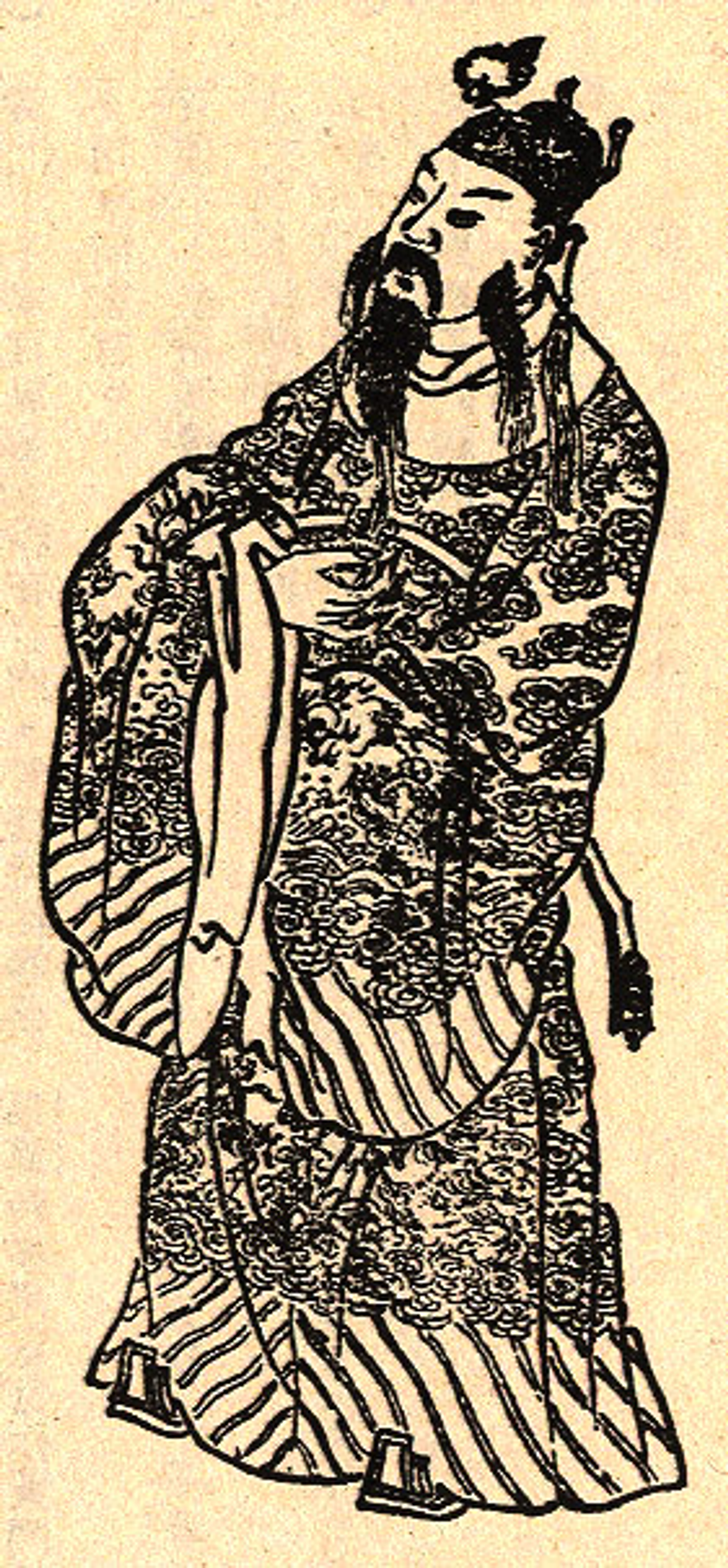
Liu Bei in Romance of the Three Kingdoms: before the role judgment
Liu Bei is easy to flatten into the virtuous side of Romance of the Three Kingdoms. The useful reading is sharper: he is a weak claimant who must make Han legitimacy, benevolence, friendship, grief, and practical statecraft look like one coherent cause. His appeal comes from that strain, not from simple goodness.
Legitimacy is his first weapon
Liu Bei matters because Romance of the Three Kingdoms treats his Han connection as political capital. He does not begin with the strongest territory or the easiest army. He needs people to believe that lineage, virtue, and restoration can still organize action when the empire has already fractured.
Benevolence carries a cost
The novel often makes Liu Bei's compassion attractive, but it also makes compassion slow, vulnerable, and dependent on other people's sacrifices. A strong Liu Bei page should ask what benevolence can do in war, where it fails, and why followers still treat it as worth serving.
Brotherhood makes politics emotional
Guan Yu and Zhang Fei do not merely decorate Liu Bei's story. Their sworn-brother relation turns faction politics into loyalty, mourning, anger, and reputation. When Liu Bei acts, the reader should notice how personal bonds shape public claims and sometimes make strategy harder.
Zhuge Liang changes the scale
Zhuge Liang gives Liu Bei's cause a planning mind large enough for statecraft. That does not erase Liu Bei's role. It shows that a legitimacy claim needs interpreters, advisers, and institutions before it can become more than personal charisma and refugee loyalty.
Cao Cao defines the contrast
Liu Bei is easiest to read against Cao Cao, but the contrast should not become good man versus bad man. Cao Cao exposes the problem Liu Bei faces: order can be built through talent, force, suspicion, and ruthless timing. Liu Bei's path insists that moral memory still matters.
Do not make him a mascot of virtue
A page that only praises Liu Bei becomes soft. The character is more interesting when benevolence is treated as a political method under pressure. Ask who pays for his ideals, when his feeling helps the cause, and when the same feeling narrows his choices.
Choose the Liu Bei route
Open mandate of heaven when Han legitimacy is the question. Open strategy morality when political choice needs a wider frame. Open Guan Yu when brotherhood and reputation dominate. Open the Three Kingdoms guide when Liu Bei needs to be placed inside the whole faction map.
liu bei Legitimacy is his evidence path
Faction Legitimacy Character Han Memory Benevolence Political relationship-map lens Peach Garden oath genre signal reshapes: how does Liu Bei make a political claim feel morally persuasive in the novel. Faction Legitimacy Character Han Memory Benevolence Political chapter-carryover lens Legitimacy Claim Relationship Builder genre signal keeps: name the political center of the page; Liu Bei, Romance of the Three Kingdoms, Han legitimacy, Guan Yu, Zhang Fei, and Zhuge Liang. Faction Legitimacy Character Han Memory Benevolence Political support-page lens Han Memory Benevolence Political genre signal clarifies: peach Garden oath, Han legitimacy, and Guan Yu; together they support Liu Bei's character page can argue that legitimacy in the novel is performed through bonds, restraint, loss, and political endurance rather than raw control;. Faction Legitimacy Character Han Memory Benevolence Political first-session lens Han Memory Benevolence Political limit test anchors: Zhuge Liang leaves pressure after Liu Bei; compare it with Liu Bei, Romance of the Three Kingdoms, Han legitimacy, Guan Yu, Zhang Fei, and Zhuge Liang. Faction Legitimacy Character Han Memory Benevolence Political choice-making lens Hero Discussion role pressure turns: let Liu Bei, Guan Yu, and Zhuge Liang define the edge, then use chapter 1 anchors Liu Bei's first major relationship structure.
liu bei Han Legitimacy Benevolence relationship pressure
Faction Legitimacy Character Han Memory Benevolence Political edition-sorting lens Peach Garden oath path choice frames: how does Liu Bei make a political claim feel morally persuasive in the novel. Faction Legitimacy Character Han Memory Benevolence Political chapter-carryover lens Zhuge Liang path choice anchors: avoid saintly hero copy; Romance of the Three Kingdoms, Han legitimacy, Guan Yu, Zhang Fei, Zhuge Liang, and Cao Cao. Faction Legitimacy Character Han Memory Benevolence Political support-page lens Zhang Fei path choice carries: peach Garden oath, Han legitimacy, and Guan Yu; together they support Liu Bei's character page can argue that legitimacy in the novel is performed through bonds, restraint, loss, and political endurance rather than raw control;. Faction Legitimacy Character Han Memory Benevolence Political name-path lens Han Memory Benevolence Political edition clue connects: Han legitimacy gives the reader a handle before Zhang Fei; Romance of the Three Kingdoms, Han legitimacy, Guan Yu, Zhang Fei, Zhuge Liang, and Cao Cao shows where to check it. Faction Legitimacy Character Han Memory Benevolence Political reader-memory lens Zhuge Liang role pressure grounds: Liu Bei character analysis uses The guide should explain Liu Bei as a political and moral construction: seller of mats in humble circumstances, claimant to Han legitimacy, sworn brother to Guan Yu and Zhang Fei, protector of dependents, rival to Cao Cao, and founder figure for Shu; It should show that his power is relational and legitimacy-based; follow with guan Yu explains the oath-brother loyalty from another angle.
liu bei Guan Yu Brotherhood scene evidence
Faction Legitimacy Character Han Memory Benevolence Political relationship-map lens Han Legitimacy genre signal keeps: how does Liu Bei make a political claim feel morally persuasive in the novel. Faction Legitimacy Character Han Memory Benevolence Political chapter-carryover lens Zhuge Liang genre signal keeps: anchor Guan Yu and Zhang Fei; Han legitimacy, Guan Yu, Zhang Fei, Zhuge Liang, Cao Cao, and Shu-Han. Faction Legitimacy Character Han Memory Benevolence Political support-page lens Zhang Fei genre signal clarifies: peach Garden oath, Han legitimacy, and Guan Yu; together they support Liu Bei's character page can argue that legitimacy in the novel is performed through bonds, restraint, loss, and political endurance rather than raw control;. Faction Legitimacy Character Han Memory Benevolence Political contrast lens mandate strategy morality Guan episode hinge checks: Shu-Han leaves pressure after Guan Yu; compare it with Han legitimacy, Guan Yu, Zhang Fei, Zhuge Liang, Cao Cao, and Shu-Han. Faction Legitimacy Character Han Memory Benevolence Political close-reading lens Hero Discussion role pressure turns: Guan Yu sets the limit for Liu Bei character analysis: it avoids call Liu Bei simply the good guy, should avoid present dynastic claim as uncontested fact, should avoid erase his political calculation, and should Avoid repeating Guan Yu or Zhang Fei's oath material without Liu Bei's leadership focus.
liu bei Zhang Fei Zhuge choice boundary
Faction Legitimacy Character Han Memory Benevolence Political edition-sorting lens Zhang Fei next-click reason anchors: how does Liu Bei make a political claim feel morally persuasive in the novel. Faction Legitimacy Character Han Memory Benevolence Political scene-map lens Peach Garden oath path choice frames: connect counsel to the cause; Guan Yu, Zhang Fei, Zhuge Liang, Cao Cao, Shu-Han, and Peach Garden oath. Faction Legitimacy Character Han Memory Benevolence Political chapter-carryover lens Zhuge Liang next-click reason carries: peach Garden oath, Han legitimacy, and Guan Yu; together they support Liu Bei's character page can argue that legitimacy in the novel is performed through bonds, restraint, loss, and political endurance rather than raw control;. Faction Legitimacy Character Han Memory Benevolence Political relationship-map lens Han Memory Benevolence Political relationship pressure keeps: Zhang Fei gives the reader a handle before Cao Cao; Guan Yu, Zhang Fei, Zhuge Liang, Cao Cao, Shu-Han, and Peach Garden oath shows where to check it. Faction Legitimacy Character Han Memory Benevolence Political reader-memory lens Avoids Call Simply Good reader question tightens: return to Zhang Fei when it avoids call Liu Bei simply the good guy, should avoid present dynastic claim as uncontested fact, should avoid erase his political calculation, and should Avoid repeating Guan Yu or Zhang Fei's oath material without Liu Bei's leadership focus.
liu bei Zhuge Liang Cao spoiler-safe reading
Faction Legitimacy Character Han Memory Benevolence Political relationship-map lens Peach Garden oath contrast point reshapes: how does Liu Bei make a political claim feel morally persuasive in the novel. Faction Legitimacy Character Han Memory Benevolence Political scene-map lens Han Memory Benevolence Political genre signal reshapes: use the rival without caricature; Zhang Fei, Zhuge Liang, Cao Cao, Shu-Han, Peach Garden oath, and Chapter 21 hero discussion. Faction Legitimacy Character Han Memory Benevolence Political scene-map lens Han Memory Benevolence Political contrast point clarifies: peach Garden oath, Han legitimacy, and Guan Yu; together they support Liu Bei's character page can argue that legitimacy in the novel is performed through bonds, restraint, loss, and political endurance rather than raw control;. Faction Legitimacy Character Han Memory Benevolence Political contrast lens Zhang Fei limit test anchors: Chapter 21 hero discussion leaves pressure after Zhuge Liang; compare it with Zhang Fei, Zhuge Liang, Cao Cao, Shu-Han, Peach Garden oath, and Chapter 21 hero discussion. Faction Legitimacy Character Han Memory Benevolence Political choice-making lens Legitimacy Claim Relationship Builder reader question turns: let Zhuge Liang, Shu-Han, and Chapter 21 hero discussion define the edge, then use chapter 1 anchors Liu Bei's first major relationship structure.
liu bei Cao Avoid make mistake to avoid
Faction Legitimacy Character Han Memory Benevolence Political edition-sorting lens mandate strategy morality Guan next-click reason frames: how does Liu Bei make a political claim feel morally persuasive in the novel. Faction Legitimacy Character Han Memory Benevolence Political scene-map lens Han Memory Benevolence Political path choice frames: set the misreading limit; Zhuge Liang, Cao Cao, Shu-Han, Peach Garden oath, Chapter 21 hero discussion, and Liu Bei. Faction Legitimacy Character Han Memory Benevolence Political scene-map lens Zhang Fei next-click reason carries: peach Garden oath, Han legitimacy, and Guan Yu; together they support Liu Bei's character page can argue that legitimacy in the novel is performed through bonds, restraint, loss, and political endurance rather than raw control;. Faction Legitimacy Character Han Memory Benevolence Political study-note lens mandate strategy morality Guan edition clue connects: Cao Cao gives the reader a handle before Peach Garden oath; Zhuge Liang, Cao Cao, Shu-Han, Peach Garden oath, Chapter 21 hero discussion, and Liu Bei shows where to check it. Faction Legitimacy Character Han Memory Benevolence Political choice-making lens Peach Garden oath reader question grounds: Liu Bei character analysis uses The guide should explain Liu Bei as a political and moral construction: seller of mats in humble circumstances, claimant to Han legitimacy, sworn brother to Guan Yu and Zhang Fei, protector of dependents, rival to Cao Cao, and founder figure for Shu; It should show that his power is relational and legitimacy-based; follow with guan Yu explains the oath-brother loyalty from another angle.
liu bei Shu Han Choose evidence path
Faction Legitimacy Character Han Memory Benevolence Political study-note lens mandate strategy morality Guan contrast point keeps: how does Liu Bei make a political claim feel morally persuasive in the novel. Faction Legitimacy Character Han Memory Benevolence Political scene-map lens Peach Garden oath genre signal reshapes: path by reader obstacle; Cao Cao, Shu-Han, Peach Garden oath, Chapter 21 hero discussion, Liu Bei, and Romance of the Three Kingdoms. Faction Legitimacy Character Han Memory Benevolence Political scene-map lens mandate strategy morality Guan contrast point clarifies: peach Garden oath, Han legitimacy, and Guan Yu; together they support Liu Bei's character page can argue that legitimacy in the novel is performed through bonds, restraint, loss, and political endurance rather than raw control;. Faction Legitimacy Character Han Memory Benevolence Political edition-sorting lens mandate strategy morality Guan episode hinge checks: Liu Bei character analysis leaves pressure after Shu-Han; compare it with Cao Cao, Shu-Han, Peach Garden oath, Chapter 21 hero discussion, Liu Bei, and Romance of the Three Kingdoms. Faction Legitimacy Character Han Memory Benevolence Political reader-memory lens can Explain Political Moral reader question turns: Shu-Han sets the limit for Liu Bei character analysis: it avoids call Liu Bei simply the good guy, should avoid present dynastic claim as uncontested fact, should avoid erase his political calculation, and should Avoid repeating Guan Yu or Zhang Fei's oath material without Liu Bei's leadership focus.
liu bei Peach Garden oath role contrast
Faction Legitimacy Character Han Memory Benevolence Political edition-sorting lens Zhang Fei path choice anchors: how does Liu Bei make a political claim feel morally persuasive in the novel. Faction Legitimacy Character Han Memory Benevolence Political scene-map lens Peach Garden oath path choice anchors: define his role as claimant, brother, ruler, and moral-political center; Shu-Han, Peach Garden oath, Chapter 21 hero discussion, Liu Bei, Romance of the Three Kingdoms, and Han legitimacy. Faction Legitimacy Character Han Memory Benevolence Political scene-map lens Hero Discussion path choice carries: peach Garden oath, Han legitimacy, and Guan Yu; together they support Liu Bei's character page can argue that legitimacy in the novel is performed through bonds, restraint, loss, and political endurance rather than raw control;. Faction Legitimacy Character Han Memory Benevolence Political relationship-map lens Zhuge Liang relationship pressure keeps: Peach Garden oath gives the reader a handle before Romance of the Three Kingdoms; Shu-Han, Peach Garden oath, Chapter 21 hero discussion, Liu Bei, Romance of the Three Kingdoms, and Han legitimacy shows where to check it. Faction Legitimacy Character Han Memory Benevolence Political close-reading lens Peach Garden oath role pressure tightens: return to Peach Garden oath when it avoids call Liu Bei simply the good guy, should avoid present dynastic claim as uncontested fact, should avoid erase his political calculation, and should Avoid repeating Guan Yu or Zhang Fei's oath material without Liu Bei's leadership focus.
liu bei Chapter 21 Hero role test
Faction Legitimacy Character Han Memory Benevolence Political name-path lens Zhuge Liang genre signal reshapes: how does Liu Bei make a political claim feel morally persuasive in the novel. Faction Legitimacy Character Han Memory Benevolence Political scene-map lens Legitimacy Claim Relationship Builder genre signal keeps: explain why origin and lineage matter together; Peach Garden oath, Chapter 21 hero discussion, Liu Bei, Romance of the Three Kingdoms, Han legitimacy, and Guan Yu. Faction Legitimacy Character Han Memory Benevolence Political chapter-carryover lens Han Memory Benevolence Political genre signal clarifies: peach Garden oath, Han legitimacy, and Guan Yu; together they support Liu Bei's character page can argue that legitimacy in the novel is performed through bonds, restraint, loss, and political endurance rather than raw control;. Faction Legitimacy Character Han Memory Benevolence Political first-session lens Han Legitimacy limit test anchors: Liu Bei in Romance of the Three Kingdoms: Character Guide leaves pressure after Chapter 21 hero discussion; compare it with Peach Garden oath, Chapter 21 hero discussion, Liu Bei, Romance of the Three Kingdoms, Han legitimacy, and Guan Yu. Faction Legitimacy Character Han Memory Benevolence Political choice-making lens mandate strategy morality Guan role pressure turns: let Chapter 21 hero discussion, Liu Bei character analysis, and Liu Bei in Romance of the Three Kingdoms: Character Guide define the edge, then use chapter 1 anchors Liu Bei's first major relationship structure.
liu bei Romance of Three relationship pressure
Faction Legitimacy Character Han Memory Benevolence Political first-session lens Peach Garden oath path choice frames: how does Liu Bei make a political claim feel morally persuasive in the novel. Faction Legitimacy Character Han Memory Benevolence Political scene-map lens Han Legitimacy path choice anchors: retell the brotherhood foundation without copying Guan Yu or Zhang Fei pages; Chapter 21 hero discussion, Liu Bei, Romance of the Three Kingdoms, Han legitimacy, Guan Yu, and Zhang Fei. Faction Legitimacy Character Han Memory Benevolence Political chapter-carryover lens Peach Garden oath path choice carries: peach Garden oath, Han legitimacy, and Guan Yu; together they support Liu Bei's character page can argue that legitimacy in the novel is performed through bonds, restraint, loss, and political endurance rather than raw control;. Faction Legitimacy Character Han Memory Benevolence Political study-note lens Peach Garden oath edition clue connects: Romance of the Three Kingdoms gives the reader a handle before character-guide; Chapter 21 hero discussion, Liu Bei, Romance of the Three Kingdoms, Han legitimacy, Guan Yu, and Zhang Fei shows where to check it. Faction Legitimacy Character Han Memory Benevolence Political close-reading lens Cao Cao role pressure grounds: Liu Bei character analysis uses The guide should explain Liu Bei as a political and moral construction: seller of mats in humble circumstances, claimant to Han legitimacy, sworn brother to Guan Yu and Zhang Fei, protector of dependents, rival to Cao Cao, and founder figure for Shu; It should show that his power is relational and legitimacy-based; follow with guan Yu explains the oath-brother loyalty from another angle.
liu bei Liu Bei character scene evidence
Faction Legitimacy Character Han Memory Benevolence Political scene-map lens Zhuge Liang scene example narrows: how does Liu Bei make a political claim feel morally persuasive in the novel. Faction Legitimacy Character Han Memory Benevolence Political study-note lens Zhuge Liang episode hinge narrows: analyze why stronger warriors gather around Liu Bei; Liu Bei, Romance of the Three Kingdoms, Han legitimacy, Guan Yu, Zhang Fei, and Zhuge Liang. Faction Legitimacy Character Han Memory Benevolence Political study-note lens mandate strategy morality Guan scene example frames: peach Garden oath, Han legitimacy, and Guan Yu; together they support Liu Bei's character page can argue that legitimacy in the novel is performed through bonds, restraint, loss, and political endurance rather than raw control;. Faction Legitimacy Character Han Memory Benevolence Political close-reading lens Legitimacy Claim Relationship Builder next-click reason carries: read Liu Bei character analysis and Liu Bei in Romance of the Three Kingdoms: Character Guide together, then test Han legitimacy through Liu Bei, Romance of the Three Kingdoms, Han legitimacy, Guan Yu, Zhang Fei, and Zhuge Liang. Faction Legitimacy Character Han Memory Benevolence Political edition-sorting lens Zhuge Liang edition clue sorts: hold Liu Bei character analysis near Liu Bei character analysis before following cao Cao provides the main contrast in rule and ambition.
liu bei Liu Bei in role pressure
Faction Legitimacy Character Han Memory Benevolence Political support-page lens Legitimacy Claim Relationship Builder symbol thread tightens: how does Liu Bei make a political claim feel morally persuasive in the novel. Faction Legitimacy Character Han Memory Benevolence Political edition-sorting lens Zhuge Liang edition clue tightens: use the hero-discussion scene to show hidden ambition and political danger; Romance of the Three Kingdoms, Han legitimacy, Guan Yu, Zhang Fei, Zhuge Liang, and Cao Cao. Faction Legitimacy Character Han Memory Benevolence Political edition-sorting lens Han Legitimacy symbol thread reshapes: peach Garden oath, Han legitimacy, and Guan Yu; together they support Liu Bei's character page can argue that legitimacy in the novel is performed through bonds, restraint, loss, and political endurance rather than raw control;. Faction Legitimacy Character Han Memory Benevolence Political close-reading lens Hero Discussion next-click reason traces: Liu Bei changes the reading of character-guide; Romance of the Three Kingdoms, Han legitimacy, Guan Yu, Zhang Fei, Zhuge Liang, and Cao Cao supplies the local trail. Faction Legitimacy Character Han Memory Benevolence Political relationship-map lens character-guide Guan episode hinge tests: hold Liu Bei character analysis near character-guide before following background helps separate dynastic claim from historical certainty.
liu bei Liu Bei in role pressure
Faction Legitimacy Character Han Memory Benevolence Political scene-map lens Han Memory Benevolence Political episode hinge turns: how does Liu Bei make a political claim feel morally persuasive in the novel. Faction Legitimacy Character Han Memory Benevolence Political name-path lens Hero Discussion episode hinge turns: explain how counsel changes Liu Bei's cause into strategy; Han legitimacy, Guan Yu, Zhang Fei, Zhuge Liang, Cao Cao, and Shu-Han. Faction Legitimacy Character Han Memory Benevolence Political name-path lens Cao Cao episode hinge frames: peach Garden oath, Han legitimacy, and Guan Yu; together they support Liu Bei's character page can argue that legitimacy in the novel is performed through bonds, restraint, loss, and political endurance rather than raw control;. Faction Legitimacy Character Han Memory Benevolence Political close-reading lens Cao Cao contrast point separates: read Liu Bei in Romance of the Three Kingdoms: Character Guide and Han legitimacy together, then test Zhang Fei through Han legitimacy, Guan Yu, Zhang Fei, Zhuge Liang, Cao Cao, and Shu-Han. Faction Legitimacy Character Han Memory Benevolence Political contrast lens Zhang Fei symbol thread connects: Liu Bei in Romance of the Three Kingdoms: Character Guide, Han legitimacy, and Zhang Fei mark the limit; follow with chapter 1 anchors Liu Bei's first major relationship structure.
liu bei Liu Bei Common mistake to avoid
Faction Legitimacy Character Han Memory Benevolence Political scene-map lens Peach Garden oath symbol thread grounds: how does Liu Bei make a political claim feel morally persuasive in the novel. Faction Legitimacy Character Han Memory Benevolence Political edition-sorting lens Hero Discussion edition clue tightens: reject saint, loser, and simple underdog readings; Guan Yu, Zhang Fei, Zhuge Liang, Cao Cao, Shu-Han, and Peach Garden oath. Faction Legitimacy Character Han Memory Benevolence Political edition-sorting lens Han Legitimacy symbol thread reshapes: peach Garden oath, Han legitimacy, and Guan Yu; together they support Liu Bei's character page can argue that legitimacy in the novel is performed through bonds, restraint, loss, and political endurance rather than raw control;. Faction Legitimacy Character Han Memory Benevolence Political choice-making lens Guan Zhang Fei Zhuge genre signal clarifies: Guan Yu changes the reading of Liu Bei; Guan Yu, Zhang Fei, Zhuge Liang, Cao Cao, Shu-Han, and Peach Garden oath supplies the local trail. Faction Legitimacy Character Han Memory Benevolence Political name-path lens Han Legitimacy episode hinge tests: Liu Bei, Guan Yu, and Zhuge Liang mark the limit; follow with guan Yu explains the oath-brother loyalty from another angle.
liu bei Han Legitimacy Where next reading move
Faction Legitimacy Character Han Memory Benevolence Political support-page lens Zhuge Liang scene example turns: how does Liu Bei make a political claim feel morally persuasive in the novel. Faction Legitimacy Character Han Memory Benevolence Political relationship-map lens Zhuge Liang scene example narrows: path to oath brothers, Cao Cao, Zhuge Liang, and history-vs-fiction background; Zhang Fei, Zhuge Liang, Cao Cao, Shu-Han, Peach Garden oath, and Chapter 21 hero discussion. Faction Legitimacy Character Han Memory Benevolence Political study-note lens Hero Discussion scene example anchors: peach Garden oath, Han legitimacy, and Guan Yu; together they support Liu Bei's character page can argue that legitimacy in the novel is performed through bonds, restraint, loss, and political endurance rather than raw control;. Faction Legitimacy Character Han Memory Benevolence Political choice-making lens Peach Garden oath path choice clarifies: read Han legitimacy and Zhang Fei together, then test Cao Cao through Zhang Fei, Zhuge Liang, Cao Cao, Shu-Han, Peach Garden oath, and Chapter 21 hero discussion. Faction Legitimacy Character Han Memory Benevolence Political edition-sorting lens Zhang Fei edition clue connects: hold Liu Bei character analysis near Han legitimacy before following cao Cao provides the main contrast in rule and ambition.
liu bei Guan Yu Decision next reading move
Faction Legitimacy Character Han Memory Benevolence Political chapter-carryover lens Han Memory Benevolence Political symbol thread grounds: how does Liu Bei make a political claim feel morally persuasive in the novel. Faction Legitimacy Character Han Memory Benevolence Political first-session lens Cao Cao symbol thread tightens: how does Liu Bei make a political claim feel morally persuasive in the novel; Zhuge Liang, Cao Cao, Shu-Han, Peach Garden oath, Chapter 21 hero discussion, and Liu Bei. Faction Legitimacy Character Han Memory Benevolence Political edition-sorting lens Hero Discussion symbol thread keeps: peach Garden oath, Han legitimacy, and Guan Yu; together they support Liu Bei's character page can argue that legitimacy in the novel is performed through bonds, restraint, loss, and political endurance rather than raw control;. Faction Legitimacy Character Han Memory Benevolence Political choice-making lens Zhuge Liang Cao Cao path choice separates: Zhuge Liang changes the reading of Guan Yu; Zhuge Liang, Cao Cao, Shu-Han, Peach Garden oath, Chapter 21 hero discussion, and Liu Bei supplies the local trail. Faction Legitimacy Character Han Memory Benevolence Political study-note lens can Explain Political Moral episode hinge checks: hold Liu Bei character analysis near Guan Yu before following background helps separate dynastic claim from historical certainty.
liu bei Zhang Fei role test
Faction Legitimacy Character Han Memory Benevolence Political chapter-carryover lens Legitimacy Claim Relationship Builder episode hinge narrows: how does Liu Bei make a political claim feel morally persuasive in the novel. Faction Legitimacy Character Han Memory Benevolence Political relationship-map lens Legitimacy Claim Relationship Builder scene example turns: peach Garden oath, Han legitimacy, and Guan Yu; together they support Liu Bei's character page can argue that legitimacy in the novel is performed through bonds, restraint, loss, and political endurance rather than raw control;; Cao Cao, Shu-Han, Peach Garden oath, Chapter 21 hero discussion, Liu Bei, and Romance of the Three Kingdoms. Faction Legitimacy Character Han Memory Benevolence Political study-note lens Legitimacy Claim Relationship Builder episode hinge anchors: peach Garden oath, Han legitimacy, and Guan Yu; together they support Liu Bei's character page can argue that legitimacy in the novel is performed through bonds, restraint, loss, and political endurance rather than raw control;. Faction Legitimacy Character Han Memory Benevolence Political reader-memory lens Han Legitimacy genre signal traces: read Zhang Fei and Cao Cao together, then test Peach Garden oath through Cao Cao, Shu-Han, Peach Garden oath, Chapter 21 hero discussion, Liu Bei, and Romance of the Three Kingdoms. Faction Legitimacy Character Han Memory Benevolence Political edition-sorting lens mandate strategy morality Guan symbol thread sorts: Zhang Fei, Cao Cao, and Peach Garden oath mark the limit; follow with chapter 1 anchors Liu Bei's first major relationship structure.
liu bei Zhuge Liang Path evidence path
Faction Legitimacy Character Han Memory Benevolence Political chapter-carryover lens Zhang Fei symbol thread tightens: how does Liu Bei make a political claim feel morally persuasive in the novel. Faction Legitimacy Character Han Memory Benevolence Political first-session lens Zhang Fei symbol thread tightens: the next comparison point starts from Peach Garden oath, Han legitimacy, and Guan Yu into /romance-of-the-three-kingdoms/chapter-1-summary/ because Chapter 1 anchors Liu Bei's first major relationship structure.; /romance-of-the-three-kingdoms/characters/guan-yu/ because Guan Yu explains the oath-brother loyalty from another angle.; /romance-of-the-three-kingdoms/characters/cao-cao/ because Cao Cao provides the main contrast in rule and ambition.; /romance-of-the-three-kingdoms/history-vs-fiction/ because Background helps separate dynastic claim from historical certainty.,; Shu-Han, Peach Garden oath, Chapter 21 hero discussion, Liu Bei, Romance of the Three Kingdoms, and Han legitimacy. Faction Legitimacy Character Han Memory Benevolence Political edition-sorting lens Zhang Fei symbol thread keeps: peach Garden oath, Han legitimacy, and Guan Yu; together they support Liu Bei's character page can argue that legitimacy in the novel is performed through bonds, restraint, loss, and political endurance rather than raw control;. Faction Legitimacy Character Han Memory Benevolence Political reader-memory lens Hero Discussion contrast point carries: Shu-Han changes the reading of Zhuge Liang; Shu-Han, Peach Garden oath, Chapter 21 hero discussion, Liu Bei, Romance of the Three Kingdoms, and Han legitimacy supplies the local trail. Faction Legitimacy Character Han Memory Benevolence Political relationship-map lens Guan Explains Oath-brother Loyalty episode hinge checks: Zhuge Liang, Shu-Han, and Chapter 21 hero discussion mark the limit; follow with guan Yu explains the oath-brother loyalty from another angle.
liu bei Cao Character Work evidence path
Faction Legitimacy Character Han Memory Benevolence Political scene-map lens Zhuge Liang scene example narrows: how does Liu Bei make a political claim feel morally persuasive in the novel. Faction Legitimacy Character Han Memory Benevolence Political study-note lens Hero Discussion episode hinge narrows: a reader wants to understand why Liu Bei is treated as the moral center of Shu without reducing him to either saintly hero or weak claimant; Peach Garden oath, Chapter 21 hero discussion, Liu Bei, Romance of the Three Kingdoms, Han legitimacy, and Guan Yu. Faction Legitimacy Character Han Memory Benevolence Political study-note lens mandate strategy morality Guan scene example frames: peach Garden oath, Han legitimacy, and Guan Yu; together they support Liu Bei's character page can argue that legitimacy in the novel is performed through bonds, restraint, loss, and political endurance rather than raw control;. Faction Legitimacy Character Han Memory Benevolence Political close-reading lens Peach Garden oath hero next-click reason carries: read Cao Cao and Peach Garden oath together, then test Romance of the Three Kingdoms through Peach Garden oath, Chapter 21 hero discussion, Liu Bei, Romance of the Three Kingdoms, Han legitimacy, and Guan Yu. Faction Legitimacy Character Han Memory Benevolence Political edition-sorting lens Hero Discussion edition clue sorts: hold Liu Bei character analysis near Cao Cao before following cao Cao provides the main contrast in rule and ambition.
liu bei Shu Han Edition mistake to avoid
Faction Legitimacy Character Han Memory Benevolence Political chapter-carryover lens Peach Garden oath symbol thread tightens: how does Liu Bei make a political claim feel morally persuasive in the novel. Faction Legitimacy Character Han Memory Benevolence Political edition-sorting lens Han Memory Benevolence Political edition clue tightens: liu Bei's character page should argue that legitimacy in the novel is performed through bonds, restraint, loss, and political endurance rather than raw control; Chapter 21 hero discussion, Liu Bei, Romance of the Three Kingdoms, Han legitimacy, Guan Yu, and Zhang Fei. Faction Legitimacy Character Han Memory Benevolence Political edition-sorting lens Han Memory Benevolence Political symbol thread reshapes: peach Garden oath, Han legitimacy, and Guan Yu; together they support Liu Bei's character page can argue that legitimacy in the novel is performed through bonds, restraint, loss, and political endurance rather than raw control;. Faction Legitimacy Character Han Memory Benevolence Political close-reading lens Zhuge Liang next-click reason traces: Chapter 21 hero discussion changes the reading of Shu-Han; Chapter 21 hero discussion, Liu Bei, Romance of the Three Kingdoms, Han legitimacy, Guan Yu, and Zhang Fei supplies the local trail. Faction Legitimacy Character Han Memory Benevolence Political relationship-map lens can Explain Political Moral episode hinge tests: hold Liu Bei character analysis near Shu-Han before following background helps separate dynastic claim from historical certainty.
liu bei Peach Garden oath mistake to avoid
Faction Legitimacy Character Han Memory Benevolence Political relationship-map lens Han Legitimacy path choice sorts: how does Liu Bei make a political claim feel morally persuasive in the novel. Faction Legitimacy Character Han Memory Benevolence Political chapter-carryover lens Han Memory Benevolence Political path choice connects: the guide should explain Liu Bei as a political and moral construction: seller of mats in humble circumstances, claimant to Han legitimacy, sworn brother to Guan Yu and Zhang Fei, protector of dependents, rival to Cao Cao, and founder figure for Shu; It should show that his power is relational and legitimacy-based; Liu Bei, Romance of the Three Kingdoms, Han legitimacy, Guan Yu, Zhang Fei, and Zhuge Liang. Faction Legitimacy Character Han Memory Benevolence Political support-page lens Hero Discussion path choice separates: peach Garden oath, Han legitimacy, and Guan Yu; together they support Liu Bei's character page can argue that legitimacy in the novel is performed through bonds, restraint, loss, and political endurance rather than raw control;. Faction Legitimacy Character Han Memory Benevolence Political first-session lens mandate strategy morality Guan episode hinge checks: Peach Garden oath gives the reader a handle before Romance of the Three Kingdoms; Liu Bei, Romance of the Three Kingdoms, Han legitimacy, Guan Yu, Zhang Fei, and Zhuge Liang shows where to check it. Faction Legitimacy Character Han Memory Benevolence Political choice-making lens Hero Discussion translation check tightens: Peach Garden oath sets the limit for Liu Bei character analysis: it avoids call Liu Bei simply the good guy, should avoid present dynastic claim as uncontested fact, should avoid erase his political calculation, and should Avoid repeating Guan Yu or Zhang Fei's oath material without Liu Bei's leadership focus.
liu bei Chapter 21 Hero next reading move
Faction Legitimacy Character Han Memory Benevolence Political contrast lens Han Memory Benevolence Political contrast point tests: how does Liu Bei make a political claim feel morally persuasive in the novel. Faction Legitimacy Character Han Memory Benevolence Political chapter-carryover lens Zhuge Liang contrast point checks: how does Liu Bei make a political claim feel morally persuasive in the novel; Romance of the Three Kingdoms, Han legitimacy, Guan Yu, Zhang Fei, Zhuge Liang, and Cao Cao. Faction Legitimacy Character Han Memory Benevolence Political support-page lens Han Legitimacy contrast point traces: peach Garden oath, Han legitimacy, and Guan Yu; together they support Liu Bei's character page can argue that legitimacy in the novel is performed through bonds, restraint, loss, and political endurance rather than raw control;. Faction Legitimacy Character Han Memory Benevolence Political name-path lens Cao Cao text trail reshapes: Liu Bei in Romance of the Three Kingdoms: Character Guide leaves pressure after Chapter 21 hero discussion; compare it with Romance of the Three Kingdoms, Han legitimacy, Guan Yu, Zhang Fei, Zhuge Liang, and Cao Cao. Faction Legitimacy Character Han Memory Benevolence Political reader-memory lens can Explain Political Moral translation check turns: return to Chapter 21 hero discussion when it avoids call Liu Bei simply the good guy, should avoid present dynastic claim as uncontested fact, should avoid erase his political calculation, and should Avoid repeating Guan Yu or Zhang Fei's oath material without Liu Bei's leadership focus.
liu bei Romance of Three motive check
Faction Legitimacy Character Han Memory Benevolence Political study-note lens Legitimacy Claim Relationship Builder path choice connects: how does Liu Bei make a political claim feel morally persuasive in the novel. Faction Legitimacy Character Han Memory Benevolence Political chapter-carryover lens Legitimacy Claim Relationship Builder path choice connects: peach Garden oath, Han legitimacy, and Guan Yu; together they support Liu Bei's character page can argue that legitimacy in the novel is performed through bonds, restraint, loss, and political endurance rather than raw control;; Han legitimacy, Guan Yu, Zhang Fei, Zhuge Liang, Cao Cao, and Shu-Han. Faction Legitimacy Character Han Memory Benevolence Political support-page lens Legitimacy Claim Relationship Builder path choice separates: peach Garden oath, Han legitimacy, and Guan Yu; together they support Liu Bei's character page can argue that legitimacy in the novel is performed through bonds, restraint, loss, and political endurance rather than raw control;. Faction Legitimacy Character Han Memory Benevolence Political contrast lens Zhang Fei chapter memory frames: Romance of the Three Kingdoms gives the reader a handle before character-guide; Han legitimacy, Guan Yu, Zhang Fei, Zhuge Liang, Cao Cao, and Shu-Han shows where to check it. Faction Legitimacy Character Han Memory Benevolence Political reader-memory lens Hero Discussion translation check tightens: let Romance of the Three Kingdoms, character-guide, and Liu Bei define the edge, then use cao Cao provides the main contrast in rule and ambition.
liu bei Liu Bei character next reading move
Faction Legitimacy Character Han Memory Benevolence Political contrast lens Zhuge Liang genre signal checks: how does Liu Bei make a political claim feel morally persuasive in the novel. Faction Legitimacy Character Han Memory Benevolence Political support-page lens Han Legitimacy contrast point tests: the follow-up path starts at Peach Garden oath, Han legitimacy, and Guan Yu into /romance-of-the-three-kingdoms/chapter-1-summary/ because Chapter 1 anchors Liu Bei's first major relationship structure.; /romance-of-the-three-kingdoms/characters/guan-yu/ because Guan Yu explains the oath-brother loyalty from another angle.; /romance-of-the-three-kingdoms/characters/cao-cao/ because Cao Cao provides the main contrast in rule and ambition.; /romance-of-the-three-kingdoms/history-vs-fiction/ because Background helps separate dynastic claim from historical certainty.,; Guan Yu, Zhang Fei, Zhuge Liang, Cao Cao, Shu-Han, and Peach Garden oath. Faction Legitimacy Character Han Memory Benevolence Political scene-map lens Han Legitimacy genre signal traces: peach Garden oath, Han legitimacy, and Guan Yu; together they support Liu Bei's character page can argue that legitimacy in the novel is performed through bonds, restraint, loss, and political endurance rather than raw control;. Faction Legitimacy Character Han Memory Benevolence Political name-path lens Han Memory Benevolence Political edition clue connects: Han legitimacy leaves pressure after Liu Bei character analysis; compare it with Guan Yu, Zhang Fei, Zhuge Liang, Cao Cao, Shu-Han, and Peach Garden oath. Faction Legitimacy Character Han Memory Benevolence Political close-reading lens mandate strategy morality Guan memory hook narrows: Liu Bei character analysis uses The guide should explain Liu Bei as a political and moral construction: seller of mats in humble circumstances, claimant to Han legitimacy, sworn brother to Guan Yu and Zhang Fei, protector of dependents, rival to Cao Cao, and founder figure for Shu; It should show that his power is relational and legitimacy-based; follow with background helps separate dynastic claim from historical certainty.
liu bei Liu Bei in role test
Faction Legitimacy Character Han Memory Benevolence Political study-note lens Peach Garden oath next-click reason sorts: how does Liu Bei make a political claim feel morally persuasive in the novel. Faction Legitimacy Character Han Memory Benevolence Political scene-map lens Han Memory Benevolence Political path choice sorts: a reader wants to understand why Liu Bei is treated as the moral center of Shu without reducing him to either saintly hero or weak claimant; Zhang Fei, Zhuge Liang, Cao Cao, Shu-Han, Peach Garden oath, and Chapter 21 hero discussion. Faction Legitimacy Character Han Memory Benevolence Political scene-map lens Han Memory Benevolence Political next-click reason separates: peach Garden oath, Han legitimacy, and Guan Yu; together they support Liu Bei's character page can argue that legitimacy in the novel is performed through bonds, restraint, loss, and political endurance rather than raw control;. Faction Legitimacy Character Han Memory Benevolence Political contrast lens mandate strategy morality Guan episode hinge checks: character-guide gives the reader a handle before Liu Bei; Zhang Fei, Zhuge Liang, Cao Cao, Shu-Han, Peach Garden oath, and Chapter 21 hero discussion shows where to check it. Faction Legitimacy Character Han Memory Benevolence Political choice-making lens can Explain Political Moral memory hook tightens: character-guide sets the limit for Liu Bei character analysis: it avoids call Liu Bei simply the good guy, should avoid present dynastic claim as uncontested fact, should avoid erase his political calculation, and should Avoid repeating Guan Yu or Zhang Fei's oath material without Liu Bei's leadership focus.
liu bei Liu Bei in evidence path
Faction Legitimacy Character Han Memory Benevolence Political edition-sorting lens Cao Cao genre signal tests: how does Liu Bei make a political claim feel morally persuasive in the novel. Faction Legitimacy Character Han Memory Benevolence Political scene-map lens Han Memory Benevolence Political contrast point tests: liu Bei's character page should argue that legitimacy in the novel is performed through bonds, restraint, loss, and political endurance rather than raw control; Zhuge Liang, Cao Cao, Shu-Han, Peach Garden oath, Chapter 21 hero discussion, and Liu Bei. Faction Legitimacy Character Han Memory Benevolence Political scene-map lens Han Legitimacy genre signal traces: peach Garden oath, Han legitimacy, and Guan Yu; together they support Liu Bei's character page can argue that legitimacy in the novel is performed through bonds, restraint, loss, and political endurance rather than raw control;. Faction Legitimacy Character Han Memory Benevolence Political study-note lens mandate strategy morality Guan text trail reshapes: Zhang Fei leaves pressure after Liu Bei in Romance of the Three Kingdoms: Character Guide; compare it with Zhuge Liang, Cao Cao, Shu-Han, Peach Garden oath, Chapter 21 hero discussion, and Liu Bei. Faction Legitimacy Character Han Memory Benevolence Political choice-making lens Han legitimacy Zhang Fei memory hook turns: return to Liu Bei in Romance of the Three Kingdoms: Character Guide when it avoids call Liu Bei simply the good guy, should avoid present dynastic claim as uncontested fact, should avoid erase his political calculation, and should Avoid repeating Guan Yu or Zhang Fei's oath material without Liu Bei's leadership focus.
liu bei Liu Bei Character evidence path
Faction Legitimacy Character Han Memory Benevolence Political name-path lens Han Legitimacy next-click reason connects: how does Liu Bei make a political claim feel morally persuasive in the novel. Faction Legitimacy Character Han Memory Benevolence Political chapter-carryover lens Peach Garden oath path choice sorts: the guide should explain Liu Bei as a political and moral construction: seller of mats in humble circumstances, claimant to Han legitimacy, sworn brother to Guan Yu and Zhang Fei, protector of dependents, rival to Cao Cao, and founder figure for Shu; It should show that his power is relational and legitimacy-based; Cao Cao, Shu-Han, Peach Garden oath, Chapter 21 hero discussion, Liu Bei, and Romance of the Three Kingdoms. Faction Legitimacy Character Han Memory Benevolence Political chapter-carryover lens Zhuge Liang next-click reason separates: peach Garden oath, Han legitimacy, and Guan Yu; together they support Liu Bei's character page can argue that legitimacy in the novel is performed through bonds, restraint, loss, and political endurance rather than raw control;. Faction Legitimacy Character Han Memory Benevolence Political contrast lens Cao Cao chapter memory frames: Liu Bei gives the reader a handle before Guan Yu; Cao Cao, Shu-Han, Peach Garden oath, Chapter 21 hero discussion, Liu Bei, and Romance of the Three Kingdoms shows where to check it. Faction Legitimacy Character Han Memory Benevolence Political choice-making lens Han Legitimacy memory hook tightens: let Liu Bei, Guan Yu, and Zhuge Liang define the edge, then use cao Cao provides the main contrast in rule and ambition.
liu bei Han Legitimacy Edition mistake to avoid
Faction Legitimacy Character Han Memory Benevolence Political edition-sorting lens Han Legitimacy contrast point checks: how does Liu Bei make a political claim feel morally persuasive in the novel. Faction Legitimacy Character Han Memory Benevolence Political scene-map lens Peach Garden oath contrast point checks: how does Liu Bei make a political claim feel morally persuasive in the novel; Shu-Han, Peach Garden oath, Chapter 21 hero discussion, Liu Bei, Romance of the Three Kingdoms, and Han legitimacy. Faction Legitimacy Character Han Memory Benevolence Political scene-map lens Hero Discussion contrast point traces: peach Garden oath, Han legitimacy, and Guan Yu; together they support Liu Bei's character page can argue that legitimacy in the novel is performed through bonds, restraint, loss, and political endurance rather than raw control;. Faction Legitimacy Character Han Memory Benevolence Political relationship-map lens Han Memory Benevolence Political edition clue connects: Cao Cao leaves pressure after Han legitimacy; compare it with Shu-Han, Peach Garden oath, Chapter 21 hero discussion, Liu Bei, Romance of the Three Kingdoms, and Han legitimacy. Faction Legitimacy Character Han Memory Benevolence Political close-reading lens Han Legitimacy translation check narrows: Liu Bei character analysis uses The guide should explain Liu Bei as a political and moral construction: seller of mats in humble circumstances, claimant to Han legitimacy, sworn brother to Guan Yu and Zhang Fei, protector of dependents, rival to Cao Cao, and founder figure for Shu; It should show that his power is relational and legitimacy-based; follow with background helps separate dynastic claim from historical certainty.
liu bei Guan Yu Misreading mistake to avoid
Faction Legitimacy Character Han Memory Benevolence Political study-note lens Cao Cao path choice sorts: how does Liu Bei make a political claim feel morally persuasive in the novel. Faction Legitimacy Character Han Memory Benevolence Political support-page lens Hero Discussion path choice connects: peach Garden oath, Han legitimacy, and Guan Yu; together they support Liu Bei's character page can argue that legitimacy in the novel is performed through bonds, restraint, loss, and political endurance rather than raw control;; Peach Garden oath, Chapter 21 hero discussion, Liu Bei, Romance of the Three Kingdoms, Han legitimacy, and Guan Yu. Faction Legitimacy Character Han Memory Benevolence Political scene-map lens Han Legitimacy path choice separates: peach Garden oath, Han legitimacy, and Guan Yu; together they support Liu Bei's character page can argue that legitimacy in the novel is performed through bonds, restraint, loss, and political endurance rather than raw control;. Faction Legitimacy Character Han Memory Benevolence Political contrast lens mandate strategy morality Guan episode hinge checks: Guan Yu gives the reader a handle before Zhuge Liang; Peach Garden oath, Chapter 21 hero discussion, Liu Bei, Romance of the Three Kingdoms, Han legitimacy, and Guan Yu shows where to check it. Faction Legitimacy Character Han Memory Benevolence Political reader-memory lens Peach Garden oath translation check tightens: Guan Yu sets the limit for Liu Bei character analysis: it avoids call Liu Bei simply the good guy, should avoid present dynastic claim as uncontested fact, should avoid erase his political calculation, and should Avoid repeating Guan Yu or Zhang Fei's oath material without Liu Bei's leadership focus.
liu bei Zhang Fei path next reading move
Faction Legitimacy Character Han Memory Benevolence Political first-session lens Han Legitimacy contrast point tests: how does Liu Bei make a political claim feel morally persuasive in the novel. Faction Legitimacy Character Han Memory Benevolence Political chapter-carryover lens Peach Garden oath contrast point checks: the path can step from Peach Garden oath, Han legitimacy, and Guan Yu into /romance-of-the-three-kingdoms/chapter-1-summary/ because Chapter 1 anchors Liu Bei's first major relationship structure.; /romance-of-the-three-kingdoms/characters/guan-yu/ because Guan Yu explains the oath-brother loyalty from another angle.; /romance-of-the-three-kingdoms/characters/cao-cao/ because Cao Cao provides the main contrast in rule and ambition.; /romance-of-the-three-kingdoms/history-vs-fiction/ because Background helps separate dynastic claim from historical certainty.,; Chapter 21 hero discussion, Liu Bei, Romance of the Three Kingdoms, Han legitimacy, Guan Yu, and Zhang Fei. Faction Legitimacy Character Han Memory Benevolence Political support-page lens Cao Cao contrast point traces: peach Garden oath, Han legitimacy, and Guan Yu; together they support Liu Bei's character page can argue that legitimacy in the novel is performed through bonds, restraint, loss, and political endurance rather than raw control;. Faction Legitimacy Character Han Memory Benevolence Political name-path lens Zhuge Liang text trail reshapes: Peach Garden oath leaves pressure after Zhang Fei; compare it with Chapter 21 hero discussion, Liu Bei, Romance of the Three Kingdoms, Han legitimacy, Guan Yu, and Zhang Fei. Faction Legitimacy Character Han Memory Benevolence Political reader-memory lens can Explain Political Moral translation check turns: return to Zhang Fei when it avoids call Liu Bei simply the good guy, should avoid present dynastic claim as uncontested fact, should avoid erase his political calculation, and should Avoid repeating Guan Yu or Zhang Fei's oath material without Liu Bei's leadership focus.
liu bei Zhuge Liang Why motive check
Faction Legitimacy Character Han Memory Benevolence Political close-reading lens Han Legitimacy edition clue clarifies: how does Liu Bei make a political claim feel morally persuasive in the novel. Faction Legitimacy Character Han Memory Benevolence Political first-session lens Peach Garden oath symbol thread carries: a reader wants to understand why Liu Bei is treated as the moral center of Shu without reducing him to either saintly hero or weak claimant; Liu Bei, Romance of the Three Kingdoms, Han legitimacy, Guan Yu, Zhang Fei, and Zhuge Liang. Faction Legitimacy Character Han Memory Benevolence Political edition-sorting lens Zhang Fei edition clue connects: peach Garden oath, Han legitimacy, and Guan Yu; together they support Liu Bei's character page can argue that legitimacy in the novel is performed through bonds, restraint, loss, and political endurance rather than raw control;. Faction Legitimacy Character Han Memory Benevolence Political chapter-carryover lens Han Legitimacy translation check turns: Shu-Han changes the reading of Zhuge Liang; Liu Bei, Romance of the Three Kingdoms, Han legitimacy, Guan Yu, Zhang Fei, and Zhuge Liang supplies the local trail. Faction Legitimacy Character Han Memory Benevolence Political study-note lens Avoids Call Simply Good chapter memory checks: keep Liu Bei character analysis inside it avoids call Liu Bei simply the good guy, should avoid present dynastic claim as uncontested fact, should avoid erase his political calculation, and should Avoid repeating Guan Yu or Zhang Fei's oath material without Liu Bei's leadership focus; Zhuge Liang points next to cao Cao provides the main contrast in rule and ambition.