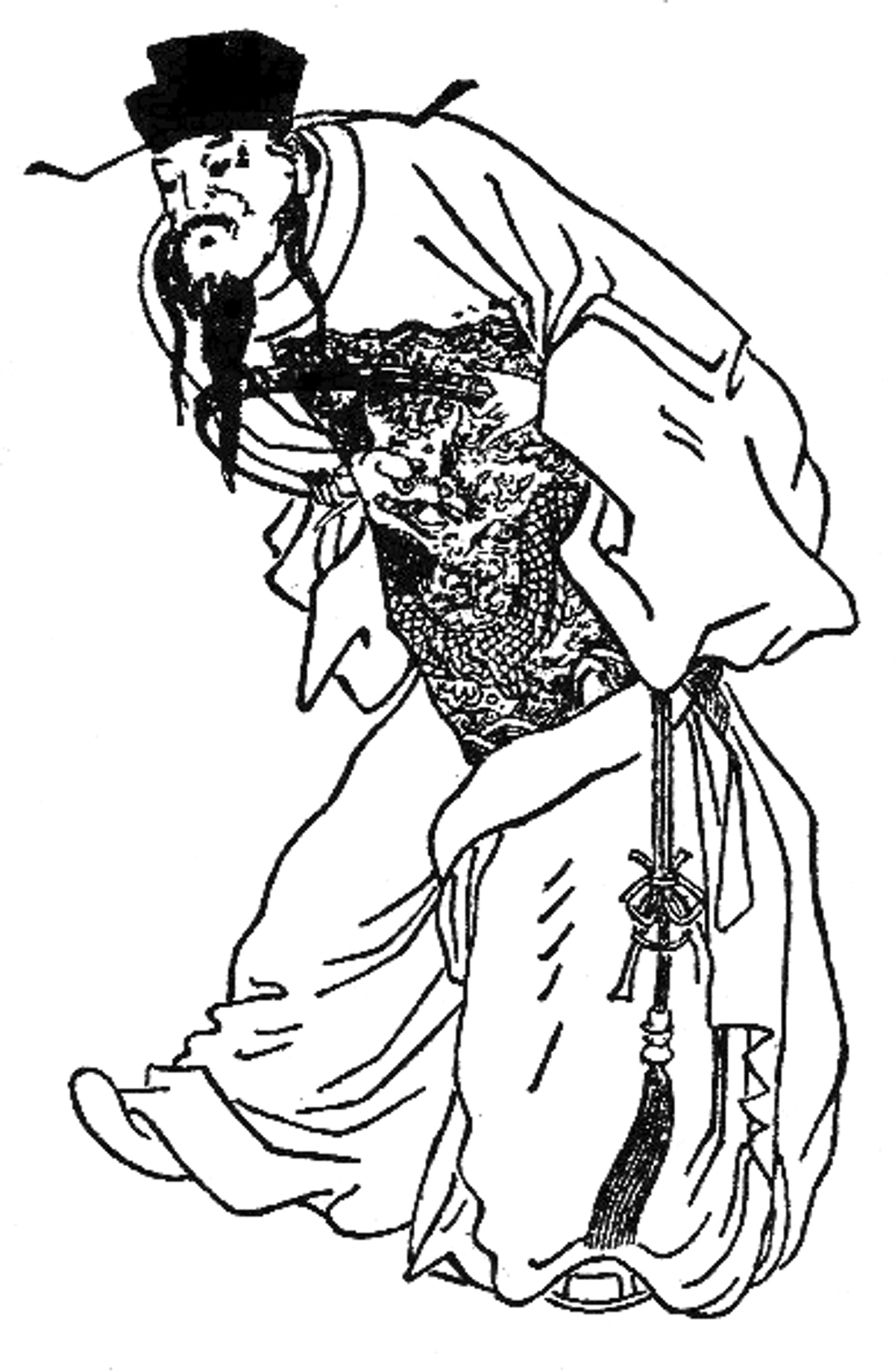
Cao Cao in Romance of the Three Kingdoms: before the role judgment
Cao Cao is not useful as a cardboard villain. Romance of the Three Kingdoms makes him compelling because competence, suspicion, talent, coercion, poetry, and ambition keep occupying the same person. He is the figure who asks whether order built by fear and brilliance can still claim political necessity.
Order arrives with suspicion
Cao Cao restores control through talent, discipline, and speed, but the novel keeps suspicion close to that success. Readers should watch how often practical order depends on fear, secrecy, or preemptive violence. His strength is never morally neutral.
Talent is part of his power
Cao Cao attracts, tests, and uses capable people. That matters because his authority is not only brute force. It is a system for recognizing usefulness, rewarding service, and turning intelligence into state power. The problem is what that system demands in return.
Liu Bei makes judgment harder
Liu Bei exposes Cao Cao's moral problem, but Cao Cao also exposes Liu Bei's practical weakness. The contrast works because both men answer collapse differently. One builds order through hard calculation; the other tries to make legitimacy and benevolence politically binding.
Mandate talk never fully clears him
Cao Cao can look like the person who saves a broken world and also like the person who absorbs it. Mandate and legitimacy language therefore stay unstable around him. The reader should ask whether success proves authority or merely makes authority harder to contest.
Sima Yi sharpens the long game
Sima Yi helps readers see that Cao Cao's political world rewards patience, suspicion, and institutional survival. The point is not to collapse their roles together. It is to notice how a system built for control also trains later figures to wait, conceal, and inherit leverage.
Antihero memory can get too clean
Modern games and dramas can make Cao Cao stylish, quotable, and efficiently dark. That memory is useful for recognition, but it can polish away the novel's harder question: what kind of political order makes cruelty feel rational?
Pick the Cao Cao question
Open strategy morality when competence and ruthlessness need a shared frame. Open mandate when legitimacy is the issue. Open Liu Bei when moral contrast matters. Open Sima Yi when patience, survival, and later political timing become the next problem.
cao Order arrives with suspicion evidence path
Faction Legitimacy Character Administrative Talent Coercive Order contrast lens Talent Recruitment role pressure tests: use Dong Zhuo crisis, Chapter 4 escape, and Liu Bei as concrete example. Faction Legitimacy Character Administrative Talent Coercive Order choice-making lens Moral Ambiguity reader question checks: define Cao Cao's central paradox; Guan Yu, hero discussion, Cao Cao, Romance of the Three Kingdoms, Liu Bei, and Sima Yi. Faction Legitimacy Character Administrative Talent Coercive Order choice-making lens Moral Ambiguity role pressure narrows: dong Zhuo crisis, Chapter 4 escape, and Liu Bei; together they support Cao Cao's guide can argue that the novel makes him dangerous because competence and suspicion reinforce each other;. Faction Legitimacy Character Administrative Talent Coercive Order relationship-map lens Hero Discussion text trail sorts: Guan Yu, hero discussion, Cao Cao, Romance of the Three Kingdoms, Liu Bei, and Sima Yi matters because Sima Yi and Wei narrow the follow-up. Faction Legitimacy Character Administrative Talent Coercive Order support-page lens Brilliant Order-builder Under Moral path choice traces: return to Cao Cao when it avoids call him only a villain, should avoid excuse cruelty as genius, should avoid confuse the historical Cao Cao with the novel's moral framing, and should avoid write the same rivalry section as Liu Bei's page.
cao Liu Bei Talent is relationship pressure
Faction Legitimacy Character Administrative Talent Coercive Order study-note lens Talent Recruitment memory hook reshapes: use Dong Zhuo crisis, Chapter 4 escape, and Liu Bei as concrete example. Faction Legitimacy Character Administrative Talent Coercive Order reader-memory lens Dong Zhuo crisis memory hook reshapes: move beyond villain language; hero discussion, Cao Cao, Romance of the Three Kingdoms, Liu Bei, Sima Yi, and mandate. Faction Legitimacy Character Administrative Talent Coercive Order reader-memory lens Dong Zhuo crisis memory hook turns: dong Zhuo crisis, Chapter 4 escape, and Liu Bei; together they support Cao Cao's guide can argue that the novel makes him dangerous because competence and suspicion reinforce each other;. Faction Legitimacy Character Administrative Talent Coercive Order contrast lens strategy morality mandate Liu limit test tests: Liu Bei remains useful beside mandate; statecraft meets hero discussion, Cao Cao, Romance of the Three Kingdoms, Liu Bei, Sima Yi, and mandate. Faction Legitimacy Character Administrative Talent Coercive Order support-page lens Guan shows Cao's complicated next-click reason clarifies: let Liu Bei, mandate, and statecraft define the edge, then use guan Yu shows Cao Cao's complicated treatment of talent and loyalty.
cao Sima Yi Liu Bei scene evidence
Faction Legitimacy Character Administrative Talent Coercive Order edition-sorting lens strategy morality mandate Liu translation check frames: use Dong Zhuo crisis, Chapter 4 escape, and Liu Bei as concrete example. Faction Legitimacy Character Administrative Talent Coercive Order reader-memory lens Moral Ambiguity memory hook frames: use the main moral contrast; Cao Cao, Romance of the Three Kingdoms, Liu Bei, Sima Yi, mandate, and Wei. Faction Legitimacy Character Administrative Talent Coercive Order reader-memory lens Moral Ambiguity translation check grounds: dong Zhuo crisis, Chapter 4 escape, and Liu Bei; together they support Cao Cao's guide can argue that the novel makes him dangerous because competence and suspicion reinforce each other;. Faction Legitimacy Character Administrative Talent Coercive Order relationship-map lens strategy morality mandate Liu text trail sorts: Sima Yi remains useful beside Wei; suspicion meets Cao Cao, Romance of the Three Kingdoms, Liu Bei, Sima Yi, mandate, and Wei. Faction Legitimacy Character Administrative Talent Coercive Order chapter-carryover lens Hero Discussion contrast point clarifies: return to Sima Yi when it avoids call him only a villain, should avoid excuse cruelty as genius, should avoid confuse the historical Cao Cao with the novel's moral framing, and should avoid write the same rivalry section as Liu Bei's page.
cao Mandate talk never fully choice boundary
Faction Legitimacy Character Administrative Talent Coercive Order relationship-map lens strategy morality mandate Liu reader question connects: use Dong Zhuo crisis, Chapter 4 escape, and Liu Bei as concrete example. Faction Legitimacy Character Administrative Talent Coercive Order choice-making lens Hero Discussion role pressure connects: tie ambition to legitimacy; Romance of the Three Kingdoms, Liu Bei, Sima Yi, mandate, Wei, and statecraft. Faction Legitimacy Character Administrative Talent Coercive Order choice-making lens Hero Discussion reader question tightens: dong Zhuo crisis, Chapter 4 escape, and Liu Bei; together they support Cao Cao's guide can argue that the novel makes him dangerous because competence and suspicion reinforce each other;. Faction Legitimacy Character Administrative Talent Coercive Order edition-sorting lens Liu Bei Sima mandate chapter memory checks: Romance of the Three Kingdoms, Liu Bei, Sima Yi, mandate, Wei, and statecraft matters because statecraft and Dong Zhuo crisis narrow the follow-up. Faction Legitimacy Character Administrative Talent Coercive Order support-page lens Moral Ambiguity contrast point traces: let mandate, statecraft, and Dong Zhuo crisis define the edge, then use background keeps the novel's framing separate from historical biography.
cao Wei Sima Yi sharpens spoiler-safe reading
Faction Legitimacy Character Administrative Talent Coercive Order first-session lens Talent Recruitment role pressure checks: use Dong Zhuo crisis, Chapter 4 escape, and Liu Bei as concrete example. Faction Legitimacy Character Administrative Talent Coercive Order close-reading lens Moral Ambiguity role pressure checks: connect future pressure without overclaiming; Liu Bei, Sima Yi, mandate, Wei, statecraft, and suspicion. Faction Legitimacy Character Administrative Talent Coercive Order reader-memory lens Moral Ambiguity role pressure turns: dong Zhuo crisis, Chapter 4 escape, and Liu Bei; together they support Cao Cao's guide can argue that the novel makes him dangerous because competence and suspicion reinforce each other;. Faction Legitimacy Character Administrative Talent Coercive Order study-note lens Talent Recruitment relationship pressure connects: Liu Bei, Sima Yi, mandate, Wei, statecraft, and suspicion matters because suspicion and Chapter 4 escape narrow the follow-up. Faction Legitimacy Character Administrative Talent Coercive Order scene-map lens Avoids Call him Only path choice separates: return to Wei when it avoids call him only a villain, should avoid excuse cruelty as genius, should avoid confuse the historical Cao Cao with the novel's moral framing, and should avoid write the same rivalry section as Liu Bei's page.
cao Statecraft Antihero memory can next-page signal
Faction Legitimacy Character Administrative Talent Coercive Order study-note lens Talent Recruitment memory hook keeps: use Dong Zhuo crisis, Chapter 4 escape, and Liu Bei as concrete example. Faction Legitimacy Character Administrative Talent Coercive Order close-reading lens Hero Discussion translation check reshapes: set the adaptation limit; Sima Yi, mandate, Wei, statecraft, suspicion, and Dong Zhuo crisis. Faction Legitimacy Character Administrative Talent Coercive Order reader-memory lens Hero Discussion memory hook narrows: dong Zhuo crisis, Chapter 4 escape, and Liu Bei; together they support Cao Cao's guide can argue that the novel makes him dangerous because competence and suspicion reinforce each other;. Faction Legitimacy Character Administrative Talent Coercive Order edition-sorting lens Dong Zhuo crisis chapter memory checks: statecraft remains useful beside Dong Zhuo crisis; Guan Yu meets Sima Yi, mandate, Wei, statecraft, suspicion, and Dong Zhuo crisis. Faction Legitimacy Character Administrative Talent Coercive Order support-page lens Moral Ambiguity next-click reason carries: let statecraft, Dong Zhuo crisis, and Guan Yu define the edge, then use guan Yu shows Cao Cao's complicated treatment of talent and loyalty.
cao Suspicion Pick Cao motive check
Faction Legitimacy Character Administrative Talent Coercive Order edition-sorting lens strategy morality mandate Liu translation check anchors: use Dong Zhuo crisis, Chapter 4 escape, and Liu Bei as concrete example. Faction Legitimacy Character Administrative Talent Coercive Order reader-memory lens Moral Ambiguity translation check frames: path by reader obstacle; mandate, Wei, statecraft, suspicion, Dong Zhuo crisis, and Chapter 4 escape. Faction Legitimacy Character Administrative Talent Coercive Order choice-making lens Moral Ambiguity translation check tightens: dong Zhuo crisis, Chapter 4 escape, and Liu Bei; together they support Cao Cao's guide can argue that the novel makes him dangerous because competence and suspicion reinforce each other;. Faction Legitimacy Character Administrative Talent Coercive Order study-note lens mandate Wei statecraft suspicion relationship pressure connects: suspicion remains useful beside Chapter 4 escape; hero discussion meets mandate, Wei, statecraft, suspicion, Dong Zhuo crisis, and Chapter 4 escape. Faction Legitimacy Character Administrative Talent Coercive Order chapter-carryover lens Hero Discussion contrast point carries: return to suspicion when it avoids call him only a villain, should avoid excuse cruelty as genius, should avoid confuse the historical Cao Cao with the novel's moral framing, and should avoid write the same rivalry section as Liu Bei's page.
cao Dong Zhuo crisis What role contrast
Faction Legitimacy Character Administrative Talent Coercive Order name-path lens strategy morality mandate Liu reader question sorts: use Dong Zhuo crisis, Chapter 4 escape, and Liu Bei as concrete example. Faction Legitimacy Character Administrative Talent Coercive Order choice-making lens Hero Discussion reader question connects: define him as organizer, strategist, and moral threat; Wei, statecraft, suspicion, Dong Zhuo crisis, Chapter 4 escape, and Guan Yu. Faction Legitimacy Character Administrative Talent Coercive Order close-reading lens Hero Discussion reader question grounds: dong Zhuo crisis, Chapter 4 escape, and Liu Bei; together they support Cao Cao's guide can argue that the novel makes him dangerous because competence and suspicion reinforce each other;. Faction Legitimacy Character Administrative Talent Coercive Order edition-sorting lens Hero Discussion limit test tests: Wei, statecraft, suspicion, Dong Zhuo crisis, Chapter 4 escape, and Guan Yu matters because Guan Yu and Romance of the Three Kingdoms narrow the follow-up. Faction Legitimacy Character Administrative Talent Coercive Order scene-map lens Moral Ambiguity contrast point separates: let Dong Zhuo crisis, Guan Yu, and Romance of the Three Kingdoms define the edge, then use background keeps the novel's framing separate from historical biography.
cao Chapter 4 Escape Early role test
Faction Legitimacy Character Administrative Talent Coercive Order contrast lens Talent Recruitment role pressure tests: use Dong Zhuo crisis, Chapter 4 escape, and Liu Bei as concrete example. Faction Legitimacy Character Administrative Talent Coercive Order close-reading lens Moral Ambiguity reader question checks: use early chapters to show how crisis forms his reputation; statecraft, suspicion, Dong Zhuo crisis, Chapter 4 escape, Guan Yu, and hero discussion. Faction Legitimacy Character Administrative Talent Coercive Order close-reading lens Moral Ambiguity role pressure narrows: dong Zhuo crisis, Chapter 4 escape, and Liu Bei; together they support Cao Cao's guide can argue that the novel makes him dangerous because competence and suspicion reinforce each other;. Faction Legitimacy Character Administrative Talent Coercive Order study-note lens strategy morality mandate Liu text trail sorts: statecraft, suspicion, Dong Zhuo crisis, Chapter 4 escape, Guan Yu, and hero discussion matters because hero discussion and Cao Cao character analysis narrow the follow-up. Faction Legitimacy Character Administrative Talent Coercive Order support-page lens Hero Discussion path choice traces: return to Chapter 4 escape when it avoids call him only a villain, should avoid excuse cruelty as genius, should avoid confuse the historical Cao Cao with the novel's moral framing, and should avoid write the same rivalry section as Liu Bei's page.
cao Guan Yu Political Intelligence relationship pressure
Faction Legitimacy Character Administrative Talent Coercive Order study-note lens Talent Recruitment memory hook reshapes: use Dong Zhuo crisis, Chapter 4 escape, and Liu Bei as concrete example. Faction Legitimacy Character Administrative Talent Coercive Order reader-memory lens Liu Bei memory hook reshapes: explain how Cao Cao reads opponents and absorbs talent; suspicion, Dong Zhuo crisis, Chapter 4 escape, Guan Yu, hero discussion, and Cao Cao. Faction Legitimacy Character Administrative Talent Coercive Order reader-memory lens Liu Bei memory hook turns: dong Zhuo crisis, Chapter 4 escape, and Liu Bei; together they support Cao Cao's guide can argue that the novel makes him dangerous because competence and suspicion reinforce each other;. Faction Legitimacy Character Administrative Talent Coercive Order contrast lens Brilliant Order-builder Under Moral limit test tests: Guan Yu remains useful beside Romance of the Three Kingdoms; character-guide meets suspicion, Dong Zhuo crisis, Chapter 4 escape, Guan Yu, hero discussion, and Cao Cao. Faction Legitimacy Character Administrative Talent Coercive Order support-page lens Moral Ambiguity next-click reason clarifies: let Guan Yu, Romance of the Three Kingdoms, and character-guide define the edge, then use guan Yu shows Cao Cao's complicated treatment of talent and loyalty.
cao Hero Discussion With Liu scene evidence
Faction Legitimacy Character Administrative Talent Coercive Order choice-making lens Moral Ambiguity edition clue carries: use Dong Zhuo crisis, Chapter 4 escape, and Liu Bei as concrete example. Faction Legitimacy Character Administrative Talent Coercive Order contrast lens Talent Recruitment edition clue carries: analyze recognition, concealment, and rivalry; Dong Zhuo crisis, Chapter 4 escape, Guan Yu, hero discussion, Cao Cao, and Romance of the Three Kingdoms. Faction Legitimacy Character Administrative Talent Coercive Order contrast lens Talent Recruitment edition clue sorts: dong Zhuo crisis, Chapter 4 escape, and Liu Bei; together they support Cao Cao's guide can argue that the novel makes him dangerous because competence and suspicion reinforce each other;. Faction Legitimacy Character Administrative Talent Coercive Order scene-map lens Hero Discussion memory hook narrows: Cao Cao character analysis changes the reading of hero discussion; Dong Zhuo crisis, Chapter 4 escape, Guan Yu, hero discussion, Cao Cao, and Romance of the Three Kingdoms supplies the local trail. Faction Legitimacy Character Administrative Talent Coercive Order name-path lens Dong Zhuo crisis chapter memory tests: keep Cao Cao character analysis inside it avoids call him only a villain, should avoid excuse cruelty as genius, should avoid confuse the historical Cao Cao with the novel's moral framing, and should avoid write the same rivalry section as Liu Bei's page; hero discussion points next to the strategy page can expand the competence-versus-morality theme.
cao Romance of Three Kingdoms role pressure
Faction Legitimacy Character Administrative Talent Coercive Order close-reading lens Brilliant Order-builder Under Moral chapter memory separates: use Dong Zhuo crisis, Chapter 4 escape, and Liu Bei as concrete example. Faction Legitimacy Character Administrative Talent Coercive Order name-path lens strategy morality mandate Liu limit test traces: contrast legitimacy, ambition, and moral framing; Chapter 4 escape, Guan Yu, hero discussion, Cao Cao, Romance of the Three Kingdoms, and Liu Bei. Faction Legitimacy Character Administrative Talent Coercive Order name-path lens strategy morality mandate Liu chapter memory anchors: dong Zhuo crisis, Chapter 4 escape, and Liu Bei; together they support Cao Cao's guide can argue that the novel makes him dangerous because competence and suspicion reinforce each other;. Faction Legitimacy Character Administrative Talent Coercive Order scene-map lens Brilliant Order-builder Under Moral translation check tightens: Cao Cao should not float away from Romance of the Three Kingdoms; Chapter 4 escape, Guan Yu, hero discussion, Cao Cao, Romance of the Three Kingdoms, and Liu Bei pins the claim to the page. Faction Legitimacy Character Administrative Talent Coercive Order edition-sorting lens Avoids Call him Only edition clue keeps: keep Cao Cao character analysis inside it avoids call him only a villain, should avoid excuse cruelty as genius, should avoid confuse the historical Cao Cao with the novel's moral framing, and should avoid write the same rivalry section as Liu Bei's page; Romance of the Three Kingdoms points next to background keeps the novel's framing separate from historical biography.
cao Cao character With Guan role pressure
Faction Legitimacy Character Administrative Talent Coercive Order close-reading lens Hero Discussion relationship pressure separates: use Dong Zhuo crisis, Chapter 4 escape, and Liu Bei as concrete example. Faction Legitimacy Character Administrative Talent Coercive Order contrast lens Talent Recruitment text trail separates: explain his attraction to capable opponents and followers; Guan Yu, hero discussion, Cao Cao, Romance of the Three Kingdoms, Liu Bei, and Sima Yi. Faction Legitimacy Character Administrative Talent Coercive Order first-session lens Talent Recruitment relationship pressure keeps: dong Zhuo crisis, Chapter 4 escape, and Liu Bei; together they support Cao Cao's guide can argue that the novel makes him dangerous because competence and suspicion reinforce each other;. Faction Legitimacy Character Administrative Talent Coercive Order support-page lens Guan hero discussion Liu translation check turns: Cao Cao in Romance of the Three Kingdoms: Character Guide becomes clearer beside Cao Cao character analysis; Liu Bei keeps the example close. Faction Legitimacy Character Administrative Talent Coercive Order name-path lens Liu Bei provides legitimacy episode hinge frames: keep Cao Cao character analysis inside it avoids call him only a villain, should avoid excuse cruelty as genius, should avoid confuse the historical Cao Cao with the novel's moral framing, and should avoid write the same rivalry section as Liu Bei's page; Cao Cao character analysis points next to liu Bei provides the legitimacy contrast central to Cao Cao's page.
cao Cao in Romance of mistake to avoid
Faction Legitimacy Character Administrative Talent Coercive Order reader-memory lens Dong Zhuo crisis scene example clarifies: use Dong Zhuo crisis, Chapter 4 escape, and Liu Bei as concrete example. Faction Legitimacy Character Administrative Talent Coercive Order relationship-map lens strategy morality mandate Liu episode hinge clarifies: reject pure villain and pure realist readings; hero discussion, Cao Cao, Romance of the Three Kingdoms, Liu Bei, Sima Yi, and mandate. Faction Legitimacy Character Administrative Talent Coercive Order relationship-map lens strategy morality mandate Liu scene example checks: dong Zhuo crisis, Chapter 4 escape, and Liu Bei; together they support Cao Cao's guide can argue that the novel makes him dangerous because competence and suspicion reinforce each other;. Faction Legitimacy Character Administrative Talent Coercive Order support-page lens Brilliant Order-builder Under Moral translation check tightens: read character-guide and Cao Cao together, then test Sima Yi through hero discussion, Cao Cao, Romance of the Three Kingdoms, Liu Bei, Sima Yi, and mandate. Faction Legitimacy Character Administrative Talent Coercive Order contrast lens can Explain Organizer Strategist text trail connects: keep Cao Cao character analysis inside it avoids call him only a villain, should avoid excuse cruelty as genius, should avoid confuse the historical Cao Cao with the novel's moral framing, and should avoid write the same rivalry section as Liu Bei's page; character-guide points next to guan Yu shows Cao Cao's complicated treatment of talent and loyalty.
cao Cao in Romance of next reading move
Faction Legitimacy Character Administrative Talent Coercive Order close-reading lens Moral Ambiguity edition clue clarifies: use Dong Zhuo crisis, Chapter 4 escape, and Liu Bei as concrete example. Faction Legitimacy Character Administrative Talent Coercive Order first-session lens Talent Recruitment symbol thread carries: path to Liu Bei, Guan Yu, strategy morality, and history-vs-fiction; Cao Cao, Romance of the Three Kingdoms, Liu Bei, Sima Yi, mandate, and Wei. Faction Legitimacy Character Administrative Talent Coercive Order edition-sorting lens Talent Recruitment edition clue connects: dong Zhuo crisis, Chapter 4 escape, and Liu Bei; together they support Cao Cao's guide can argue that the novel makes him dangerous because competence and suspicion reinforce each other;. Faction Legitimacy Character Administrative Talent Coercive Order chapter-carryover lens Hero Discussion translation check turns: Liu Bei changes the reading of Cao Cao in Romance of the Three Kingdoms: Character Guide; Cao Cao, Romance of the Three Kingdoms, Liu Bei, Sima Yi, mandate, and Wei supplies the local trail. Faction Legitimacy Character Administrative Talent Coercive Order study-note lens Avoids Call him Only chapter memory checks: keep Cao Cao character analysis inside it avoids call him only a villain, should avoid excuse cruelty as genius, should avoid confuse the historical Cao Cao with the novel's moral framing, and should avoid write the same rivalry section as Liu Bei's page; Cao Cao in Romance of the Three Kingdoms: Character Guide points next to the strategy page can expand the competence-versus-morality theme.
cao Cao Decision next reading move
Faction Legitimacy Character Administrative Talent Coercive Order choice-making lens Brilliant Order-builder Under Moral chapter memory traces: use Dong Zhuo crisis, Chapter 4 escape, and Liu Bei as concrete example. Faction Legitimacy Character Administrative Talent Coercive Order name-path lens strategy morality mandate Liu chapter memory traces: use Dong Zhuo crisis, Chapter 4 escape, and Liu Bei as concrete example; Romance of the Three Kingdoms, Liu Bei, Sima Yi, mandate, Wei, and statecraft. Faction Legitimacy Character Administrative Talent Coercive Order relationship-map lens strategy morality mandate Liu chapter memory frames: dong Zhuo crisis, Chapter 4 escape, and Liu Bei; together they support Cao Cao's guide can argue that the novel makes him dangerous because competence and suspicion reinforce each other;. Faction Legitimacy Character Administrative Talent Coercive Order scene-map lens strategy morality mandate Liu memory hook grounds: Wei should not float away from Cao Cao; Romance of the Three Kingdoms, Liu Bei, Sima Yi, mandate, Wei, and statecraft pins the claim to the page. Faction Legitimacy Character Administrative Talent Coercive Order contrast lens Administrative Talent Coercive Order edition clue reshapes: keep Cao Cao character analysis inside it avoids call him only a villain, should avoid excuse cruelty as genius, should avoid confuse the historical Cao Cao with the novel's moral framing, and should avoid write the same rivalry section as Liu Bei's page; Cao Cao points next to background keeps the novel's framing separate from historical biography.
cao Liu Bei role test
Faction Legitimacy Character Administrative Talent Coercive Order reader-memory lens Liu Bei relationship pressure traces: use Dong Zhuo crisis, Chapter 4 escape, and Liu Bei as concrete example. Faction Legitimacy Character Administrative Talent Coercive Order first-session lens Talent Recruitment relationship pressure separates: dong Zhuo crisis, Chapter 4 escape, and Liu Bei; together they support Cao Cao's guide can argue that the novel makes him dangerous because competence and suspicion reinforce each other;; Liu Bei, Sima Yi, mandate, Wei, statecraft, and suspicion. Faction Legitimacy Character Administrative Talent Coercive Order edition-sorting lens Talent Recruitment relationship pressure reshapes: dong Zhuo crisis, Chapter 4 escape, and Liu Bei; together they support Cao Cao's guide can argue that the novel makes him dangerous because competence and suspicion reinforce each other;. Faction Legitimacy Character Administrative Talent Coercive Order support-page lens Liu Bei memory hook narrows: mandate becomes clearer beside Liu Bei; statecraft keeps the example close. Faction Legitimacy Character Administrative Talent Coercive Order relationship-map lens Dong Zhuo crisis episode hinge anchors: keep Cao Cao character analysis inside it avoids call him only a villain, should avoid excuse cruelty as genius, should avoid confuse the historical Cao Cao with the novel's moral framing, and should avoid write the same rivalry section as Liu Bei's page; Liu Bei points next to liu Bei provides the legitimacy contrast central to Cao Cao's page.
cao Sima Yi Path evidence path
Faction Legitimacy Character Administrative Talent Coercive Order close-reading lens Hero Discussion scene example carries: use Dong Zhuo crisis, Chapter 4 escape, and Liu Bei as concrete example. Faction Legitimacy Character Administrative Talent Coercive Order relationship-map lens strategy morality mandate Liu scene example clarifies: the next useful path begins with Dong Zhuo crisis, Chapter 4 escape, and Liu Bei into /romance-of-the-three-kingdoms/characters/liu-bei/ because Liu Bei provides the legitimacy contrast central to Cao Cao's page.; /romance-of-the-three-kingdoms/characters/guan-yu/ because Guan Yu shows Cao Cao's complicated treatment of talent and loyalty.; /romance-of-the-three-kingdoms/strategy-morality/ because The strategy page can expand the competence-versus-morality theme.; /romance-of-the-three-kingdoms/history-vs-fiction/ because Background keeps the novel's framing separate from historical biography.,; Sima Yi, mandate, Wei, statecraft, suspicion, and Dong Zhuo crisis. Faction Legitimacy Character Administrative Talent Coercive Order study-note lens strategy morality mandate Liu scene example tests: dong Zhuo crisis, Chapter 4 escape, and Liu Bei; together they support Cao Cao's guide can argue that the novel makes him dangerous because competence and suspicion reinforce each other;. Faction Legitimacy Character Administrative Talent Coercive Order scene-map lens Talent Recruitment memory hook grounds: read Sima Yi and Wei together, then test suspicion through Sima Yi, mandate, Wei, statecraft, suspicion, and Dong Zhuo crisis. Faction Legitimacy Character Administrative Talent Coercive Order contrast lens Avoids Call him Only text trail sorts: keep Cao Cao character analysis inside it avoids call him only a villain, should avoid excuse cruelty as genius, should avoid confuse the historical Cao Cao with the novel's moral framing, and should avoid write the same rivalry section as Liu Bei's page; Sima Yi points next to guan Yu shows Cao Cao's complicated treatment of talent and loyalty.
cao Mandate Character Work evidence path
Faction Legitimacy Character Administrative Talent Coercive Order close-reading lens Moral Ambiguity edition clue carries: use Dong Zhuo crisis, Chapter 4 escape, and Liu Bei as concrete example. Faction Legitimacy Character Administrative Talent Coercive Order first-session lens Talent Recruitment edition clue carries: a reader wants to understand why Cao Cao is compelling even when the novel often frames him as morally dangerous; mandate, Wei, statecraft, suspicion, Dong Zhuo crisis, and Chapter 4 escape. Faction Legitimacy Character Administrative Talent Coercive Order first-session lens Talent Recruitment edition clue sorts: dong Zhuo crisis, Chapter 4 escape, and Liu Bei; together they support Cao Cao's guide can argue that the novel makes him dangerous because competence and suspicion reinforce each other;. Faction Legitimacy Character Administrative Talent Coercive Order chapter-carryover lens Hero Discussion memory hook narrows: statecraft changes the reading of mandate; mandate, Wei, statecraft, suspicion, Dong Zhuo crisis, and Chapter 4 escape supplies the local trail. Faction Legitimacy Character Administrative Talent Coercive Order relationship-map lens Strategy can Expand Competence-versus-morality chapter memory tests: keep Cao Cao character analysis inside it avoids call him only a villain, should avoid excuse cruelty as genius, should avoid confuse the historical Cao Cao with the novel's moral framing, and should avoid write the same rivalry section as Liu Bei's page; mandate points next to the strategy page can expand the competence-versus-morality theme.
cao Wei Edition Boundary mistake to avoid
Faction Legitimacy Character Administrative Talent Coercive Order close-reading lens Brilliant Order-builder Under Moral chapter memory separates: use Dong Zhuo crisis, Chapter 4 escape, and Liu Bei as concrete example. Faction Legitimacy Character Administrative Talent Coercive Order study-note lens strategy morality mandate Liu limit test traces: cao Cao's guide should argue that the novel makes him dangerous because competence and suspicion reinforce each other; Wei, statecraft, suspicion, Dong Zhuo crisis, Chapter 4 escape, and Guan Yu. Faction Legitimacy Character Administrative Talent Coercive Order study-note lens strategy morality mandate Liu chapter memory anchors: dong Zhuo crisis, Chapter 4 escape, and Liu Bei; together they support Cao Cao's guide can argue that the novel makes him dangerous because competence and suspicion reinforce each other;. Faction Legitimacy Character Administrative Talent Coercive Order scene-map lens Liu Bei translation check tightens: Chapter 4 escape should not float away from Wei; Wei, statecraft, suspicion, Dong Zhuo crisis, Chapter 4 escape, and Guan Yu pins the claim to the page. Faction Legitimacy Character Administrative Talent Coercive Order first-session lens Administrative Talent Coercive Order edition clue keeps: keep Cao Cao character analysis inside it avoids call him only a villain, should avoid excuse cruelty as genius, should avoid confuse the historical Cao Cao with the novel's moral framing, and should avoid write the same rivalry section as Liu Bei's page; Wei points next to background keeps the novel's framing separate from historical biography.
cao Statecraft Misreading Avoid mistake to avoid
Faction Legitimacy Character Administrative Talent Coercive Order first-session lens strategy morality mandate Liu translation check anchors: use Dong Zhuo crisis, Chapter 4 escape, and Liu Bei as concrete example. Faction Legitimacy Character Administrative Talent Coercive Order reader-memory lens Dong Zhuo crisis memory hook frames: the guide should explain Cao Cao as organizer, strategist, patron, poet, suspicious survivor, and contested ruler; It should show why his force is not merely military: he reads people, controls institutions, absorbs talent, and exposes the gap between political effectiveness and moral trust; statecraft, suspicion, Dong Zhuo crisis, Chapter 4 escape, Guan Yu, and hero discussion. Faction Legitimacy Character Administrative Talent Coercive Order reader-memory lens Hero Discussion translation check grounds: dong Zhuo crisis, Chapter 4 escape, and Liu Bei; together they support Cao Cao's guide can argue that the novel makes him dangerous because competence and suspicion reinforce each other;. Faction Legitimacy Character Administrative Talent Coercive Order name-path lens Administrative Talent Coercive Order symbol thread keeps: statecraft remains useful beside Dong Zhuo crisis; Guan Yu meets statecraft, suspicion, Dong Zhuo crisis, Chapter 4 escape, Guan Yu, and hero discussion. Faction Legitimacy Character Administrative Talent Coercive Order scene-map lens Brilliant Order-builder Under Moral contrast point clarifies: Cao Cao character analysis uses The guide should explain Cao Cao as organizer, strategist, patron, poet, suspicious survivor, and contested ruler; It should show why his force is not merely military: he reads people, controls institutions, absorbs talent, and exposes the gap between political effectiveness and moral trust; follow with liu Bei provides the legitimacy contrast central to Cao Cao's page.
cao Suspicion path next reading move
Faction Legitimacy Character Administrative Talent Coercive Order name-path lens strategy morality mandate Liu role pressure sorts: use Dong Zhuo crisis, Chapter 4 escape, and Liu Bei as concrete example. Faction Legitimacy Character Administrative Talent Coercive Order choice-making lens Brilliant Order-builder Under Moral role pressure sorts: use Dong Zhuo crisis, Chapter 4 escape, and Liu Bei as concrete example; suspicion, Dong Zhuo crisis, Chapter 4 escape, Guan Yu, hero discussion, and Cao Cao. Faction Legitimacy Character Administrative Talent Coercive Order choice-making lens Brilliant Order-builder Under Moral role pressure tightens: dong Zhuo crisis, Chapter 4 escape, and Liu Bei; together they support Cao Cao's guide can argue that the novel makes him dangerous because competence and suspicion reinforce each other;. Faction Legitimacy Character Administrative Talent Coercive Order first-session lens suspicion Dong Zhuo crisis episode hinge anchors: suspicion, Dong Zhuo crisis, Chapter 4 escape, Guan Yu, hero discussion, and Cao Cao matters because Chapter 4 escape and hero discussion narrow the follow-up. Faction Legitimacy Character Administrative Talent Coercive Order scene-map lens Dong Zhuo crisis genre signal separates: suspicion sets the limit for Cao Cao character analysis: it avoids call him only a villain, should avoid excuse cruelty as genius, should avoid confuse the historical Cao Cao with the novel's moral framing, and should avoid write the same rivalry section as Liu Bei's page.
cao Dong Zhuo crisis Why motive check
Faction Legitimacy Character Administrative Talent Coercive Order first-session lens Talent Recruitment reader question tests: use Dong Zhuo crisis, Chapter 4 escape, and Liu Bei as concrete example. Faction Legitimacy Character Administrative Talent Coercive Order choice-making lens Hero Discussion role pressure tests: dong Zhuo crisis, Chapter 4 escape, and Liu Bei; together they support Cao Cao's guide can argue that the novel makes him dangerous because competence and suspicion reinforce each other;; Dong Zhuo crisis, Chapter 4 escape, Guan Yu, hero discussion, Cao Cao, and Romance of the Three Kingdoms. Faction Legitimacy Character Administrative Talent Coercive Order choice-making lens Hero Discussion reader question turns: dong Zhuo crisis, Chapter 4 escape, and Liu Bei; together they support Cao Cao's guide can argue that the novel makes him dangerous because competence and suspicion reinforce each other;. Faction Legitimacy Character Administrative Talent Coercive Order study-note lens Administrative Talent Coercive Order symbol thread keeps: Dong Zhuo crisis, Chapter 4 escape, Guan Yu, hero discussion, Cao Cao, and Romance of the Three Kingdoms matters because Guan Yu and Romance of the Three Kingdoms narrow the follow-up. Faction Legitimacy Character Administrative Talent Coercive Order support-page lens Brilliant Order-builder Under Moral next-click reason separates: Cao Cao character analysis uses The guide should explain Cao Cao as organizer, strategist, patron, poet, suspicious survivor, and contested ruler; It should show why his force is not merely military: he reads people, controls institutions, absorbs talent, and exposes the gap between political effectiveness and moral trust; follow with the strategy page can expand the competence-versus-morality theme.
cao Chapter 4 Escape Decision next reading move
Faction Legitimacy Character Administrative Talent Coercive Order name-path lens Talent Recruitment memory hook reshapes: use Dong Zhuo crisis, Chapter 4 escape, and Liu Bei as concrete example. Faction Legitimacy Character Administrative Talent Coercive Order reader-memory lens Brilliant Order-builder Under Moral translation check reshapes: the adjacent guide should begin at Dong Zhuo crisis, Chapter 4 escape, and Liu Bei into /romance-of-the-three-kingdoms/characters/liu-bei/ because Liu Bei provides the legitimacy contrast central to Cao Cao's page.; /romance-of-the-three-kingdoms/characters/guan-yu/ because Guan Yu shows Cao Cao's complicated treatment of talent and loyalty.; /romance-of-the-three-kingdoms/strategy-morality/ because The strategy page can expand the competence-versus-morality theme.; /romance-of-the-three-kingdoms/history-vs-fiction/ because Background keeps the novel's framing separate from historical biography.,; Chapter 4 escape, Guan Yu, hero discussion, Cao Cao, Romance of the Three Kingdoms, and Liu Bei. Faction Legitimacy Character Administrative Talent Coercive Order reader-memory lens Brilliant Order-builder Under Moral memory hook narrows: dong Zhuo crisis, Chapter 4 escape, and Liu Bei; together they support Cao Cao's guide can argue that the novel makes him dangerous because competence and suspicion reinforce each other;. Faction Legitimacy Character Administrative Talent Coercive Order first-session lens Administrative Talent Coercive Order scene example frames: Chapter 4 escape remains useful beside hero discussion; Cao Cao character analysis meets Chapter 4 escape, Guan Yu, hero discussion, Cao Cao, Romance of the Three Kingdoms, and Liu Bei. Faction Legitimacy Character Administrative Talent Coercive Order chapter-carryover lens Moral Ambiguity next-click reason clarifies: Chapter 4 escape sets the limit for Cao Cao character analysis: it avoids call him only a villain, should avoid excuse cruelty as genius, should avoid confuse the historical Cao Cao with the novel's moral framing, and should avoid write the same rivalry section as Liu Bei's page.
cao Guan Yu role test
Faction Legitimacy Character Administrative Talent Coercive Order edition-sorting lens strategy morality mandate Liu translation check frames: use Dong Zhuo crisis, Chapter 4 escape, and Liu Bei as concrete example. Faction Legitimacy Character Administrative Talent Coercive Order choice-making lens Hero Discussion translation check frames: a reader wants to understand why Cao Cao is compelling even when the novel often frames him as morally dangerous; Guan Yu, hero discussion, Cao Cao, Romance of the Three Kingdoms, Liu Bei, and Sima Yi. Faction Legitimacy Character Administrative Talent Coercive Order close-reading lens Liu Bei translation check tightens: dong Zhuo crisis, Chapter 4 escape, and Liu Bei; together they support Cao Cao's guide can argue that the novel makes him dangerous because competence and suspicion reinforce each other;. Faction Legitimacy Character Administrative Talent Coercive Order relationship-map lens Hero Discussion edition clue reshapes: Guan Yu remains useful beside Romance of the Three Kingdoms; character-guide meets Guan Yu, hero discussion, Cao Cao, Romance of the Three Kingdoms, Liu Bei, and Sima Yi. Faction Legitimacy Character Administrative Talent Coercive Order chapter-carryover lens Brilliant Order-builder Under Moral contrast point carries: Cao Cao character analysis uses The guide should explain Cao Cao as organizer, strategist, patron, poet, suspicious survivor, and contested ruler; It should show why his force is not merely military: he reads people, controls institutions, absorbs talent, and exposes the gap between political effectiveness and moral trust; follow with liu Bei provides the legitimacy contrast central to Cao Cao's page.
cao Hero Discussion Path evidence path
Faction Legitimacy Character Administrative Talent Coercive Order study-note lens strategy morality mandate Liu role pressure connects: use Dong Zhuo crisis, Chapter 4 escape, and Liu Bei as concrete example. Faction Legitimacy Character Administrative Talent Coercive Order close-reading lens Brilliant Order-builder Under Moral reader question sorts: cao Cao's guide should argue that the novel makes him dangerous because competence and suspicion reinforce each other; hero discussion, Cao Cao, Romance of the Three Kingdoms, Liu Bei, Sima Yi, and mandate. Faction Legitimacy Character Administrative Talent Coercive Order reader-memory lens Brilliant Order-builder Under Moral role pressure grounds: dong Zhuo crisis, Chapter 4 escape, and Liu Bei; together they support Cao Cao's guide can argue that the novel makes him dangerous because competence and suspicion reinforce each other;. Faction Legitimacy Character Administrative Talent Coercive Order edition-sorting lens strategy morality mandate Liu scene example frames: hero discussion, Cao Cao, Romance of the Three Kingdoms, Liu Bei, Sima Yi, and mandate matters because Cao Cao character analysis and Cao Cao in Romance of the Three Kingdoms: Character Guide narrow the follow-up. Faction Legitimacy Character Administrative Talent Coercive Order support-page lens Guan shows Cao's complicated genre signal traces: hero discussion sets the limit for Cao Cao character analysis: it avoids call him only a villain, should avoid excuse cruelty as genius, should avoid confuse the historical Cao Cao with the novel's moral framing, and should avoid write the same rivalry section as Liu Bei's page.
cao Romance of Three Kingdoms evidence path
Faction Legitimacy Character Administrative Talent Coercive Order first-session lens Talent Recruitment reader question checks: use Dong Zhuo crisis, Chapter 4 escape, and Liu Bei as concrete example. Faction Legitimacy Character Administrative Talent Coercive Order close-reading lens Liu Bei reader question tests: the guide should explain Cao Cao as organizer, strategist, patron, poet, suspicious survivor, and contested ruler; It should show why his force is not merely military: he reads people, controls institutions, absorbs talent, and exposes the gap between political effectiveness and moral trust; Cao Cao, Romance of the Three Kingdoms, Liu Bei, Sima Yi, mandate, and Wei. Faction Legitimacy Character Administrative Talent Coercive Order close-reading lens Liu Bei reader question narrows: dong Zhuo crisis, Chapter 4 escape, and Liu Bei; together they support Cao Cao's guide can argue that the novel makes him dangerous because competence and suspicion reinforce each other;. Faction Legitimacy Character Administrative Talent Coercive Order name-path lens Moral Ambiguity edition clue reshapes: Cao Cao, Romance of the Three Kingdoms, Liu Bei, Sima Yi, mandate, and Wei matters because character-guide and Cao Cao narrow the follow-up. Faction Legitimacy Character Administrative Talent Coercive Order support-page lens Talent Recruitment next-click reason traces: Cao Cao character analysis uses The guide should explain Cao Cao as organizer, strategist, patron, poet, suspicious survivor, and contested ruler; It should show why his force is not merely military: he reads people, controls institutions, absorbs talent, and exposes the gap between political effectiveness and moral trust; follow with the strategy page can expand the competence-versus-morality theme.
cao Cao character Edition Boundary mistake to avoid
Faction Legitimacy Character Administrative Talent Coercive Order study-note lens Talent Recruitment memory hook keeps: use Dong Zhuo crisis, Chapter 4 escape, and Liu Bei as concrete example. Faction Legitimacy Character Administrative Talent Coercive Order reader-memory lens Brilliant Order-builder Under Moral memory hook reshapes: use Dong Zhuo crisis, Chapter 4 escape, and Liu Bei as concrete example; Romance of the Three Kingdoms, Liu Bei, Sima Yi, mandate, Wei, and statecraft. Faction Legitimacy Character Administrative Talent Coercive Order choice-making lens Brilliant Order-builder Under Moral memory hook turns: dong Zhuo crisis, Chapter 4 escape, and Liu Bei; together they support Cao Cao's guide can argue that the novel makes him dangerous because competence and suspicion reinforce each other;. Faction Legitimacy Character Administrative Talent Coercive Order first-session lens Liu Bei Sima mandate episode hinge anchors: Cao Cao character analysis remains useful beside Cao Cao in Romance of the Three Kingdoms: Character Guide; Liu Bei meets Romance of the Three Kingdoms, Liu Bei, Sima Yi, mandate, Wei, and statecraft. Faction Legitimacy Character Administrative Talent Coercive Order support-page lens Avoids Call him Only next-click reason carries: Cao Cao character analysis sets the limit for Cao Cao character analysis: it avoids call him only a villain, should avoid excuse cruelty as genius, should avoid confuse the historical Cao Cao with the novel's moral framing, and should avoid write the same rivalry section as Liu Bei's page.
cao Cao in Romance of mistake to avoid
Faction Legitimacy Character Administrative Talent Coercive Order contrast lens strategy morality mandate Liu translation check anchors: use Dong Zhuo crisis, Chapter 4 escape, and Liu Bei as concrete example. Faction Legitimacy Character Administrative Talent Coercive Order reader-memory lens Liu Bei memory hook frames: dong Zhuo crisis, Chapter 4 escape, and Liu Bei; together they support Cao Cao's guide can argue that the novel makes him dangerous because competence and suspicion reinforce each other;; Liu Bei, Sima Yi, mandate, Wei, statecraft, and suspicion. Faction Legitimacy Character Administrative Talent Coercive Order reader-memory lens Dong Zhuo crisis translation check grounds: dong Zhuo crisis, Chapter 4 escape, and Liu Bei; together they support Cao Cao's guide can argue that the novel makes him dangerous because competence and suspicion reinforce each other;. Faction Legitimacy Character Administrative Talent Coercive Order study-note lens Liu Bei Sima mandate symbol thread keeps: character-guide remains useful beside Cao Cao; Sima Yi meets Liu Bei, Sima Yi, mandate, Wei, statecraft, and suspicion. Faction Legitimacy Character Administrative Talent Coercive Order scene-map lens Brilliant Order-builder Under Moral contrast point clarifies: Cao Cao character analysis uses The guide should explain Cao Cao as organizer, strategist, patron, poet, suspicious survivor, and contested ruler; It should show why his force is not merely military: he reads people, controls institutions, absorbs talent, and exposes the gap between political effectiveness and moral trust; follow with liu Bei provides the legitimacy contrast central to Cao Cao's page.
cao Cao in Romance of next reading move
Faction Legitimacy Character Administrative Talent Coercive Order relationship-map lens strategy morality mandate Liu role pressure sorts: use Dong Zhuo crisis, Chapter 4 escape, and Liu Bei as concrete example. Faction Legitimacy Character Administrative Talent Coercive Order close-reading lens Brilliant Order-builder Under Moral role pressure sorts: the adjacent guide should begin at Dong Zhuo crisis, Chapter 4 escape, and Liu Bei into /romance-of-the-three-kingdoms/characters/liu-bei/ because Liu Bei provides the legitimacy contrast central to Cao Cao's page.; /romance-of-the-three-kingdoms/characters/guan-yu/ because Guan Yu shows Cao Cao's complicated treatment of talent and loyalty.; /romance-of-the-three-kingdoms/strategy-morality/ because The strategy page can expand the competence-versus-morality theme.; /romance-of-the-three-kingdoms/history-vs-fiction/ because Background keeps the novel's framing separate from historical biography.,; Sima Yi, mandate, Wei, statecraft, suspicion, and Dong Zhuo crisis. Faction Legitimacy Character Administrative Talent Coercive Order close-reading lens Brilliant Order-builder Under Moral role pressure tightens: dong Zhuo crisis, Chapter 4 escape, and Liu Bei; together they support Cao Cao's guide can argue that the novel makes him dangerous because competence and suspicion reinforce each other;. Faction Legitimacy Character Administrative Talent Coercive Order edition-sorting lens Moral Ambiguity episode hinge anchors: Sima Yi, mandate, Wei, statecraft, suspicion, and Dong Zhuo crisis matters because Liu Bei and mandate narrow the follow-up. Faction Legitimacy Character Administrative Talent Coercive Order chapter-carryover lens can Explain Organizer Strategist genre signal separates: Cao Cao in Romance of the Three Kingdoms: Character Guide sets the limit for Cao Cao character analysis: it avoids call him only a villain, should avoid excuse cruelty as genius, should avoid confuse the historical Cao Cao with the novel's moral framing, and should avoid write the same rivalry section as Liu Bei's page.
cao Cao Why Differs motive check
Faction Legitimacy Character Administrative Talent Coercive Order chapter-carryover lens Brilliant Order-builder Under Moral episode hinge narrows: use Dong Zhuo crisis, Chapter 4 escape, and Liu Bei as concrete example. Faction Legitimacy Character Administrative Talent Coercive Order relationship-map lens Liu Bei episode hinge turns: a reader wants to understand why Cao Cao is compelling even when the novel often frames him as morally dangerous; mandate, Wei, statecraft, suspicion, Dong Zhuo crisis, and Chapter 4 escape. Faction Legitimacy Character Administrative Talent Coercive Order study-note lens Liu Bei episode hinge frames: dong Zhuo crisis, Chapter 4 escape, and Liu Bei; together they support Cao Cao's guide can argue that the novel makes him dangerous because competence and suspicion reinforce each other;. Faction Legitimacy Character Administrative Talent Coercive Order choice-making lens Talent Recruitment next-click reason carries: read Cao Cao and Sima Yi together, then test Wei through mandate, Wei, statecraft, suspicion, Dong Zhuo crisis, and Chapter 4 escape. Faction Legitimacy Character Administrative Talent Coercive Order edition-sorting lens Sima Wei symbol thread sorts: hold Cao Cao character analysis near Cao Cao before following the strategy page can expand the competence-versus-morality theme.
cao Liu Bei Decision next reading move
Faction Legitimacy Character Administrative Talent Coercive Order support-page lens Dong Zhuo crisis edition clue tightens: use Dong Zhuo crisis, Chapter 4 escape, and Liu Bei as concrete example. Faction Legitimacy Character Administrative Talent Coercive Order contrast lens Administrative Talent Coercive Order edition clue grounds: cao Cao's guide should argue that the novel makes him dangerous because competence and suspicion reinforce each other; Wei, statecraft, suspicion, Dong Zhuo crisis, Chapter 4 escape, and Guan Yu. Faction Legitimacy Character Administrative Talent Coercive Order first-session lens Administrative Talent Coercive Order edition clue reshapes: dong Zhuo crisis, Chapter 4 escape, and Liu Bei; together they support Cao Cao's guide can argue that the novel makes him dangerous because competence and suspicion reinforce each other;. Faction Legitimacy Character Administrative Talent Coercive Order choice-making lens Hero Discussion next-click reason traces: mandate changes the reading of Liu Bei; Wei, statecraft, suspicion, Dong Zhuo crisis, Chapter 4 escape, and Guan Yu supplies the local trail. Faction Legitimacy Character Administrative Talent Coercive Order study-note lens Liu Bei scene example tests: hold Cao Cao character analysis near Liu Bei before following background keeps the novel's framing separate from historical biography.