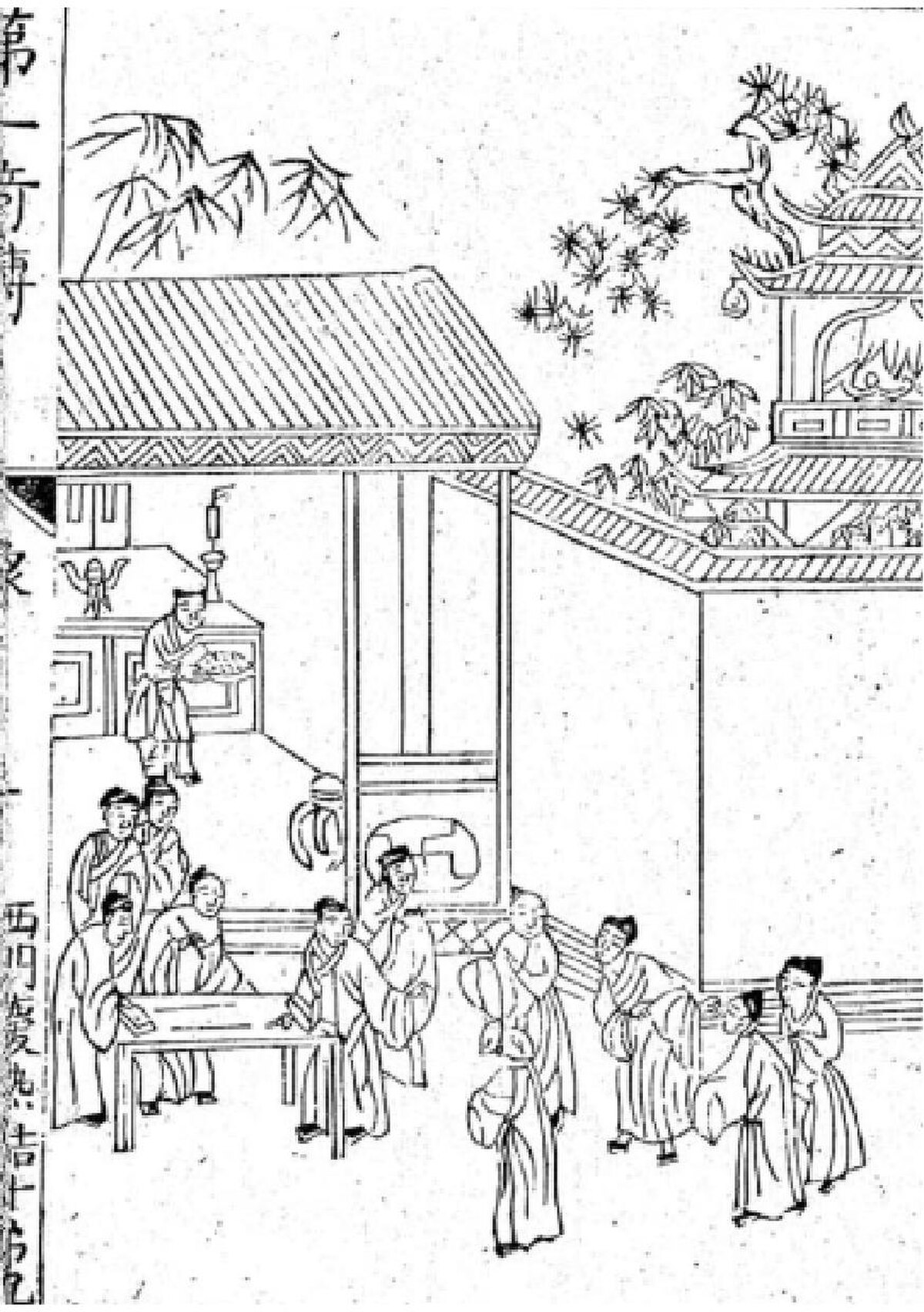
Jin Ping Mei chapter 2 reading decision
Jin Ping Mei chapter 2 makes teahouse strategy part of adult social critique, where desire, property, rooms, and witnesses shape consequence. Wang Po matters because she turns ordinary conversation, service, reputation, and access into a managed social mechanism. The page should keep manipulation visible without turning the chapter into explicit summary. Market-household second retelling: track Wang Po before teahouse, because name pressure matters before plot volume.
Market-household chapter 2 retelling
Wang Po Makes Access A Business gives Jin Ping Mei chapter 2 its first movement with Wang Po: Chapter 2 is useful when Wang Po is read as a broker of access. She does not merely observe events. Then teahouse changes the pressure: The Teahouse Is Not Neutral Space: The teahouse matters because it sits between private household and public street. People can speak there, watch there, and arrange there. Because Ximen Qing is not just background, the chapter turns name and rank pressure into a cause-and-effect reading problem: Pan Jinlian Is Placed Under Pressure: A responsible reading does not reduce Pan Jinlian to temptation. Chapter 2 shows how attention, surveillance, gossip, and access make gendered reputation fragile. By the end, Pan Jinlian leaves social mediation as the consequence to carry forward. Wang Po, Teahouse Strategy, Social Mediation, Pan Jinlian, and Ximen Qing should read as pressure, turn, and consequence; teahouse changes the path while social mediation stays open.
Market-household chapter 2 significance
teahouse gives Market-household chapter 2 significance through name and rank pressure: teahouse matters because rank, title, or name pressure changes how Jin Ping Mei asks the reader to remember the scene. Ximen Qing gives the reader a rank-and-name anchor for later pages. Let pan jinlian answer the rank pressure rather than replace it. teahouse, Ximen Qing, and Pan Jinlian significance note for Market-household chapter 2: That keeps the name pressure attached to later reading decisions.
Market-household chapter 2 after-reading analysis
After the second Market-household stop in Jin Ping Mei, check whether Ximen Qing clarified a name or rank and whether Pan Jinlian still needs a map. Ximen Qing path note for Market-household chapter 2: When the names still blur, use the character index before continuing; otherwise move forward with the rank pressure in mind. social mediation becomes useful when it keeps names, ranks, and movement in one frame.
Wang Po Makes Access A Business
Chapter 2 is useful when Wang Po is read as a broker of access. She does not merely observe events. She understands how rooms, errands, gossip, appetite, and opportunity can be arranged into a service others will pay for.
The Teahouse Is Not Neutral Space
The teahouse matters because it sits between private household and public street. People can speak there, watch there, and arrange there. Jin Ping Mei uses that middle space to show how social boundaries become porous.
Pan Jinlian Is Placed Under Pressure
A responsible reading does not reduce Pan Jinlian to temptation. Chapter 2 shows how attention, surveillance, gossip, and access make gendered reputation fragile. The reader should ask who controls the setting and who becomes exposed.
Ximen Qing Enters around Management
Ximen Qing's desire is made actionable by other people's labor. That is the social point. The chapter shows that private appetite depends on mediation, timing, and someone willing to convert access into advantage.
Do Not Make Wang Po A Comic Helper Only
Wang Po can be comic, but her role is darker than helper comedy. She demonstrates how small services can become social engineering. That makes her important to the novel's critique of commerce and desire.
From Teahouse Management To Snare
Move to chapter 3 when Wang Po's technique becomes a tighter snare. Use social critique for manipulation, household rank for access, and names when the cast and address forms begin to blur.
chapter 2 Market-household Wang Po evidence path
Market-household Critique Chapter Wang Teahouse Strategy Social relationship-map lens Second checkpoint Wang Teahouse Strategy Social next-click reason sorts: market-household second checkpoint asks how Wang Po reverses social mediation while Ximen Qing sets the next memory test. Market-household Critique Chapter Wang Teahouse Strategy Social chapter-carryover lens Second checkpoint Ximen Qing path choice sorts: define her chapter function; household threshold, Jin Ping Mei, Chapter 2, Wang Po, teahouse, and social mediation. Market-household Critique Chapter Wang Teahouse Strategy Social chapter-carryover lens Second checkpoint Pan Jinlian next-click reason separates: wang Po, teahouse, and Ximen Qing; together they support Chapter 2 matters because Wang Po shows that desire becomes actionable only when social access is managed as a service;. Market-household Critique Chapter Wang Teahouse Strategy Social first-session lens Second checkpoint Use how Wang turns episode hinge checks: Wang Po gives the reader a handle before social mediation; household threshold, Jin Ping Mei, Chapter 2, Wang Po, teahouse, and social mediation shows where to check it. Market-household Critique Chapter Wang Teahouse Strategy Social close-reading lens Second checkpoint Household Threshold memory hook tightens: Wang Po sets the limit for Jin Ping Mei chapter 2 guide: it avoids make Wang Po a harmless comic helper, treat the teahouse as neutral scenery, or reduce Pan Jinlian to temptation; It must keep mediation, access, reputation, and household vulnerability together.
chapter 2 Market-household Teahouse Is pressure shift to watch
Market-household Critique Chapter Wang Teahouse Strategy Social first-session lens Second checkpoint Wang Teahouse Strategy Social genre signal tests: market-household second checkpoint asks how teahouse tests Pan Jinlian while access sets the next memory test. Market-household Critique Chapter Wang Teahouse Strategy Social support-page lens Second checkpoint Social Mediation contrast point tests: make setting active; Jin Ping Mei, Chapter 2, Wang Po, teahouse, social mediation, and Pan Jinlian. Market-household Critique Chapter Wang Teahouse Strategy Social support-page lens Second checkpoint Social Mediation genre signal traces: wang Po, teahouse, and Ximen Qing; together they support Chapter 2 matters because Wang Po shows that desire becomes actionable only when social access is managed as a service;. Market-household Critique Chapter Wang Teahouse Strategy Social relationship-map lens Second checkpoint Read Wang checkpoint then text trail reshapes: access leaves pressure after teahouse; compare it with Jin Ping Mei, Chapter 2, Wang Po, teahouse, social mediation, and Pan Jinlian. Market-household Critique Chapter Wang Teahouse Strategy Social reader-memory lens Second checkpoint Use how Wang turns memory hook turns: return to teahouse when it avoids make Wang Po a harmless comic helper, treat the teahouse as neutral scenery, or reduce Pan Jinlian to temptation; It must keep mediation, access, reputation, and household vulnerability together.
chapter 2 Market-household Social Mediation after-reading memory test
Market-household Critique Chapter Wang Teahouse Strategy Social relationship-map lens Second checkpoint Wang Teahouse Strategy Social next-click reason connects: market-household second checkpoint asks how social mediation reframes Ximen Qing while managed access sets the next memory test. Market-household Critique Chapter Wang Teahouse Strategy Social chapter-carryover lens Second checkpoint Use how Wang turns path choice sorts: keep gendered vulnerability visible; Chapter 2, Wang Po, teahouse, social mediation, Pan Jinlian, and Ximen Qing. Market-household Critique Chapter Wang Teahouse Strategy Social chapter-carryover lens Second checkpoint Use how Wang turns next-click reason separates: wang Po, teahouse, and Ximen Qing; together they support Chapter 2 matters because Wang Po shows that desire becomes actionable only when social access is managed as a service;. Market-household Critique Chapter Wang Teahouse Strategy Social contrast lens Second checkpoint Social Mediation chapter memory frames: social mediation gives the reader a handle before Ximen Qing; Chapter 2, Wang Po, teahouse, social mediation, Pan Jinlian, and Ximen Qing shows where to check it. Market-household Critique Chapter Wang Teahouse Strategy Social close-reading lens Second checkpoint social mediation Ximen Qing memory hook tightens: let social mediation, Ximen Qing, and managed access define the edge, then use the social critique page explains brokered desire and money.
chapter 2 Market-household Pan Jinlian spoiler boundary
Market-household Critique Chapter Wang Teahouse Strategy Social first-session lens Second checkpoint Wang Teahouse Strategy Social contrast point checks: market-household second checkpoint asks how Pan Jinlian complicates access while reputation sets the next memory test. Market-household Critique Chapter Wang Teahouse Strategy Social scene-map lens Second checkpoint Household Threshold contrast point checks: connect desire to social technique; Wang Po, teahouse, social mediation, Pan Jinlian, Ximen Qing, and access. Market-household Critique Chapter Wang Teahouse Strategy Social scene-map lens Second checkpoint Household Threshold contrast point traces: wang Po, teahouse, and Ximen Qing; together they support Chapter 2 matters because Wang Po shows that desire becomes actionable only when social access is managed as a service;. Market-household Critique Chapter Wang Teahouse Strategy Social relationship-map lens Second checkpoint Ximen Qing edition clue connects: reputation leaves pressure after Pan Jinlian; compare it with Wang Po, teahouse, social mediation, Pan Jinlian, Ximen Qing, and access. Market-household Critique Chapter Wang Teahouse Strategy Social close-reading lens Second checkpoint Social Mediation translation check narrows: Jin Ping Mei chapter 2 guide uses The guide should retell Wang Po's teahouse role, Ximen Qing's need for a broker, Pan Jinlian's exposure to attention and reputation, and how errands, conversation, service, timing, and rooms become a social mechanism; It should make manipulation visible without writing explicit plot bait; follow with household rank explains rooms, access, servants, and exposure.
chapter 2 Market-household Ximen Qing next episode carryover
Market-household Critique Chapter Wang Teahouse Strategy Social relationship-map lens Second checkpoint Wang Teahouse Strategy Social next-click reason connects: market-household second checkpoint asks how Ximen Qing delays managed access while household threshold sets the next memory test. Market-household Critique Chapter Wang Teahouse Strategy Social chapter-carryover lens Second checkpoint Ximen Qing next-click reason sorts: set the misreading limit; teahouse, social mediation, Pan Jinlian, Ximen Qing, access, and managed access. Market-household Critique Chapter Wang Teahouse Strategy Social support-page lens Second checkpoint Pan Jinlian next-click reason traces: wang Po, teahouse, and Ximen Qing; together they support Chapter 2 matters because Wang Po shows that desire becomes actionable only when social access is managed as a service;. Market-household Critique Chapter Wang Teahouse Strategy Social edition-sorting lens Second checkpoint Read Wang checkpoint then scene example tests: Ximen Qing gives the reader a handle before managed access; teahouse, social mediation, Pan Jinlian, Ximen Qing, access, and managed access shows where to check it. Market-household Critique Chapter Wang Teahouse Strategy Social close-reading lens Second checkpoint Household Threshold memory hook grounds: Ximen Qing sets the limit for Jin Ping Mei chapter 2 guide: it avoids make Wang Po a harmless comic helper, treat the teahouse as neutral scenery, or reduce Pan Jinlian to temptation; It must keep mediation, access, reputation, and household vulnerability together.
chapter 2 Market-household Access From evidence checkpoint
Market-household Critique Chapter Wang Teahouse Strategy Social contrast lens Second checkpoint Wang Teahouse Strategy Social genre signal checks: market-household second checkpoint asks how access exposes reputation while Jin Ping Mei sets the next memory test. Market-household Critique Chapter Wang Teahouse Strategy Social support-page lens Second checkpoint Ximen Qing genre signal tests: path to the next checkpoint; social mediation, Pan Jinlian, Ximen Qing, access, managed access, and reputation. Market-household Critique Chapter Wang Teahouse Strategy Social scene-map lens Second checkpoint Social Mediation genre signal separates: wang Po, teahouse, and Ximen Qing; together they support Chapter 2 matters because Wang Po shows that desire becomes actionable only when social access is managed as a service;. Market-household Critique Chapter Wang Teahouse Strategy Social relationship-map lens Second checkpoint Pan Jinlian relationship pressure keeps: Jin Ping Mei leaves pressure after access; compare it with social mediation, Pan Jinlian, Ximen Qing, access, managed access, and reputation. Market-household Critique Chapter Wang Teahouse Strategy Social choice-making lens Second checkpoint Use how Wang turns memory hook narrows: return to access when it avoids make Wang Po a harmless comic helper, treat the teahouse as neutral scenery, or reduce Pan Jinlian to temptation; It must keep mediation, access, reputation, and household vulnerability together.
Chapter 2 position around Managed Access
Market-household Critique Chapter Wang Teahouse Strategy Social study-note lens Second checkpoint Wang Teahouse Strategy Social next-click reason sorts: market-household second checkpoint asks how managed access redirects household threshold while Market-household Chapter 2 sets the next memory test. Market-household Critique Chapter Wang Teahouse Strategy Social support-page lens Second checkpoint Use how Wang turns next-click reason sorts: place chapter 2 inside the early Jin Ping Mei movement: Unlike chapter 3, this page focuses on the setup of access before paid mediation becomes a tighter trap; Pan Jinlian, Ximen Qing, access, managed access, reputation, and household threshold. Market-household Critique Chapter Wang Teahouse Strategy Social scene-map lens Second checkpoint Use how Wang turns next-click reason traces: wang Po, teahouse, and Ximen Qing; together they support Chapter 2 matters because Wang Po shows that desire becomes actionable only when social access is managed as a service;. Market-household Critique Chapter Wang Teahouse Strategy Social first-session lens Second checkpoint Use how Wang turns limit test anchors: managed access gives the reader a handle before household threshold; Pan Jinlian, Ximen Qing, access, managed access, reputation, and household threshold shows where to check it. Market-household Critique Chapter Wang Teahouse Strategy Social reader-memory lens Second checkpoint Household Threshold memory hook grounds: let managed access, household threshold, and Market-household Chapter 2 define the edge, then use the social critique page explains brokered desire and money.
Reputation scene sequence in chapter 2
Market-household Critique Chapter Wang Teahouse Strategy Social first-session lens Second checkpoint Ximen Qing contrast point tests: market-household second checkpoint asks how reputation settles Jin Ping Mei while Market-household second checkpoint sets the next memory test. Market-household Critique Chapter Wang Teahouse Strategy Social support-page lens Second checkpoint Market-household Second Checkpoint genre signal checks: the guide should retell Wang Po's teahouse role, Ximen Qing's need for a broker, Pan Jinlian's exposure to attention and reputation, and how errands, conversation, service, timing, and rooms become a social mechanism; It should make manipulation visible without writing explicit plot bait; Ximen Qing, access, managed access, reputation, household threshold, and Jin Ping Mei. Market-household Critique Chapter Wang Teahouse Strategy Social scene-map lens Second checkpoint Market-household Second Checkpoint contrast point separates: wang Po, teahouse, and Ximen Qing; together they support Chapter 2 matters because Wang Po shows that desire becomes actionable only when social access is managed as a service;. Market-household Critique Chapter Wang Teahouse Strategy Social name-path lens Second checkpoint Managed Access symbol thread sorts: Market-household second checkpoint leaves pressure after reputation; compare it with Ximen Qing, access, managed access, reputation, household threshold, and Jin Ping Mei. Market-household Critique Chapter Wang Teahouse Strategy Social close-reading lens Second checkpoint Household Rank Explains Rooms translation check turns: Jin Ping Mei chapter 2 guide uses The guide should retell Wang Po's teahouse role, Ximen Qing's need for a broker, Pan Jinlian's exposure to attention and reputation, and how errands, conversation, service, timing, and rooms become a social mechanism; It should make manipulation visible without writing explicit plot bait; follow with household rank explains rooms, access, servants, and exposure.
chapter 2 Market-household Household Threshold mistake to avoid
Market-household Critique Chapter Wang Teahouse Strategy Social relationship-map lens Second checkpoint Managed Access next-click reason sorts: market-household second checkpoint asks how household threshold opens Market-household Chapter 2 while Market-household second checkpoint sets the next memory test. Market-household Critique Chapter Wang Teahouse Strategy Social scene-map lens Second checkpoint Pan Jinlian path choice sorts: explain power, money, household rank, access, example, or public display without explicit bait or moral shorthand; access, managed access, reputation, household threshold, Jin Ping Mei, and Chapter 2. Market-household Critique Chapter Wang Teahouse Strategy Social scene-map lens Second checkpoint Pan Jinlian next-click reason separates: wang Po, teahouse, and Ximen Qing; together they support Chapter 2 matters because Wang Po shows that desire becomes actionable only when social access is managed as a service;. Market-household Critique Chapter Wang Teahouse Strategy Social contrast lens Second checkpoint Household Threshold episode hinge checks: household threshold gives the reader a handle before Market-household Chapter 2; access, managed access, reputation, household threshold, Jin Ping Mei, and Chapter 2 shows where to check it. Market-household Critique Chapter Wang Teahouse Strategy Social choice-making lens Second checkpoint Managed Access memory hook tightens: household threshold sets the limit for Jin Ping Mei chapter 2 guide: it avoids make Wang Po a harmless comic helper, treat the teahouse as neutral scenery, or reduce Pan Jinlian to temptation; It must keep mediation, access, reputation, and household vulnerability together.
chapter 2 Market-household Jin Ping role pressure
Market-household Critique Chapter Wang Teahouse Strategy Social contrast lens Second checkpoint Managed Access genre signal tests: market-household second checkpoint asks how Jin Ping Mei tightens Market-household second checkpoint while Market-household second checkpoint sets the next memory test. Market-household Critique Chapter Wang Teahouse Strategy Social support-page lens Second checkpoint Social Mediation contrast point tests: track how Wang Po, teahouse, Ximen Qing changes access, reputation, rank, cost, or vulnerability; managed access, reputation, household threshold, Jin Ping Mei, Chapter 2, and Wang Po. Market-household Critique Chapter Wang Teahouse Strategy Social support-page lens Second checkpoint Pan Jinlian genre signal traces: wang Po, teahouse, and Ximen Qing; together they support Chapter 2 matters because Wang Po shows that desire becomes actionable only when social access is managed as a service;. Market-household Critique Chapter Wang Teahouse Strategy Social relationship-map lens Second checkpoint Wang Teahouse Strategy Social text trail reshapes: Market-household second checkpoint leaves pressure after Jin Ping Mei; compare it with managed access, reputation, household threshold, Jin Ping Mei, Chapter 2, and Wang Po. Market-household Critique Chapter Wang Teahouse Strategy Social reader-memory lens Second checkpoint Use how Wang turns memory hook turns: return to Jin Ping Mei when it avoids make Wang Po a harmless comic helper, treat the teahouse as neutral scenery, or reduce Pan Jinlian to temptation; It must keep mediation, access, reputation, and household vulnerability together.
chapter 2 Market-household Market household evidence path
Market-household Critique Chapter Wang Teahouse Strategy Social support-page lens Second checkpoint Managed Access limit test tightens: market-household second checkpoint asks how Market-household Chapter 2 reverses Market-household second checkpoint while Wang Po sets the next memory test. Market-household Critique Chapter Wang Teahouse Strategy Social study-note lens Second checkpoint Read Wang checkpoint then limit test grounds: use concrete anchors: Wang Po, teahouse, Ximen Qing, Pan Jinlian, social mediation, managed access; reputation, household threshold, Jin Ping Mei, Chapter 2, Wang Po, and teahouse. Market-household Critique Chapter Wang Teahouse Strategy Social name-path lens Second checkpoint Read Wang checkpoint then limit test checks: wang Po, teahouse, and Ximen Qing; together they support Chapter 2 matters because Wang Po shows that desire becomes actionable only when social access is managed as a service;. Market-household Critique Chapter Wang Teahouse Strategy Social close-reading lens Second checkpoint Use how Wang turns contrast point separates: Wang Po should not float away from Market-household Chapter 2; reputation, household threshold, Jin Ping Mei, Chapter 2, Wang Po, and teahouse pins the claim to the page. Market-household Critique Chapter Wang Teahouse Strategy Social contrast lens Second checkpoint Read Wang checkpoint then text trail reshapes: Market-household Chapter 2, Market-household second checkpoint, and Wang Po mark the limit; follow with the social critique page explains brokered desire and money.
chapter 2 Market-household Jin Ping spoiler boundary
Market-household Critique Chapter Wang Teahouse Strategy Social scene-map lens Second checkpoint Market-household Second Checkpoint relationship pressure turns: market-household second checkpoint asks how Market-household second checkpoint tests Market-household second checkpoint while teahouse sets the next memory test. Market-household Critique Chapter Wang Teahouse Strategy Social first-session lens Second checkpoint Use how Wang turns relationship pressure narrows: unlike chapter 3, this page focuses on the setup of access before paid mediation becomes a tighter trap; household threshold, Jin Ping Mei, Chapter 2, Wang Po, teahouse, and social mediation. Market-household Critique Chapter Wang Teahouse Strategy Social edition-sorting lens Second checkpoint Wang Teahouse Strategy Social relationship pressure connects: wang Po, teahouse, and Ximen Qing; together they support Chapter 2 matters because Wang Po shows that desire becomes actionable only when social access is managed as a service;. Market-household Critique Chapter Wang Teahouse Strategy Social close-reading lens Second checkpoint Household Threshold contrast point carries: Market-household second checkpoint becomes clearer beside Market-household second checkpoint; teahouse keeps the example close. Market-household Critique Chapter Wang Teahouse Strategy Social name-path lens Second checkpoint Household Rank Explains Rooms chapter memory frames: Market-household second checkpoint, Market-household second checkpoint, and teahouse mark the limit; follow with household rank explains rooms, access, servants, and exposure.
chapter 2 Market-household Jin Ping next episode carryover
Market-household Critique Chapter Wang Teahouse Strategy Social scene-map lens Second checkpoint Managed Access chapter memory grounds: market-household second checkpoint asks how Market-household second checkpoint reframes Wang Po while social mediation sets the next memory test. Market-household Critique Chapter Wang Teahouse Strategy Social study-note lens Second checkpoint Ximen Qing limit test tightens: it avoids make Wang Po a harmless comic helper, treat the teahouse as neutral scenery, or reduce Pan Jinlian to temptation; It must keep mediation, access, reputation, and household vulnerability together; Jin Ping Mei, Chapter 2, Wang Po, teahouse, social mediation, and Pan Jinlian. Market-household Critique Chapter Wang Teahouse Strategy Social name-path lens Second checkpoint Ximen Qing chapter memory checks: wang Po, teahouse, and Ximen Qing; together they support Chapter 2 matters because Wang Po shows that desire becomes actionable only when social access is managed as a service;. Market-household Critique Chapter Wang Teahouse Strategy Social choice-making lens Second checkpoint Household Threshold path choice clarifies: social mediation should not float away from Market-household second checkpoint; Jin Ping Mei, Chapter 2, Wang Po, teahouse, social mediation, and Pan Jinlian pins the claim to the page. Market-household Critique Chapter Wang Teahouse Strategy Social first-session lens Second checkpoint avoids make Wang harmless relationship pressure keeps: hold Jin Ping Mei chapter 2 guide near Market-household second checkpoint before following chapter 1 supplies the borrowed-memory opening before access is managed.
chapter 2 Market-household Jin Ping next reading move
Market-household Critique Chapter Wang Teahouse Strategy Social chapter-carryover lens Second checkpoint Managed Access relationship pressure narrows: market-household second checkpoint asks how Market-household second checkpoint complicates teahouse while Pan Jinlian sets the next memory test. Market-household Critique Chapter Wang Teahouse Strategy Social edition-sorting lens Second checkpoint Wang Teahouse Strategy Social relationship pressure narrows: market-household Critique Chapter Wang Teahouse Strategy Social name-path lens Second checkpoint Household Threshold episode hinge turns follows Market-household second checkpoint, teahouse, and Pan Jinlian as a concrete reading sequence; Chapter 2, Wang Po, teahouse, social mediation, Pan Jinlian, and Ximen Qing. Market-household Critique Chapter Wang Teahouse Strategy Social contrast lens Second checkpoint Wang Teahouse Strategy Social relationship pressure connects: wang Po, teahouse, and Ximen Qing; together they support Chapter 2 matters because Wang Po shows that desire becomes actionable only when social access is managed as a service;. Market-household Critique Chapter Wang Teahouse Strategy Social choice-making lens Second checkpoint Household Threshold next-click reason traces: teahouse becomes clearer beside Market-household second checkpoint; Pan Jinlian keeps the example close. Market-household Critique Chapter Wang Teahouse Strategy Social relationship-map lens Second checkpoint Wang Teahouse Strategy Social chapter memory frames: hold Jin Ping Mei chapter 2 guide near Market-household second checkpoint before following chapter 3 tightens Wang Po's technique into a paid snare.
chapter 2 Market-household Wang Po reader question
Market-household Critique Chapter Wang Teahouse Strategy Social chapter-carryover lens Second checkpoint Ximen Qing chapter memory tightens: market-household second checkpoint asks how Wang Po delays social mediation while Ximen Qing sets the next memory test. Market-household Critique Chapter Wang Teahouse Strategy Social name-path lens Second checkpoint Wang Teahouse Strategy Social limit test tightens: the guide should retell Wang Po's teahouse role, Ximen Qing's need for a broker, Pan Jinlian's exposure to attention and reputation, and how errands, conversation, service, timing, and rooms become a social mechanism; It should make manipulation visible without writing explicit plot bait; Wang Po, teahouse, social mediation, Pan Jinlian, Ximen Qing, and access. Market-household Critique Chapter Wang Teahouse Strategy Social name-path lens Second checkpoint Wang Teahouse Strategy Social chapter memory checks: wang Po, teahouse, and Ximen Qing; together they support Chapter 2 matters because Wang Po shows that desire becomes actionable only when social access is managed as a service;. Market-household Critique Chapter Wang Teahouse Strategy Social reader-memory lens Second checkpoint Ximen Qing contrast point separates: Ximen Qing should not float away from Wang Po; Wang Po, teahouse, social mediation, Pan Jinlian, Ximen Qing, and access pins the claim to the page. Market-household Critique Chapter Wang Teahouse Strategy Social contrast lens Second checkpoint Managed Access relationship pressure reshapes: Wang Po, social mediation, and Ximen Qing mark the limit; follow with the social critique page explains brokered desire and money.
chapter 2 Market-household Teahouse Decision next reading move
Market-household Critique Chapter Wang Teahouse Strategy Social chapter-carryover lens Second checkpoint Household Threshold text trail turns: market-household second checkpoint asks how teahouse exposes Pan Jinlian while access sets the next memory test. Market-household Critique Chapter Wang Teahouse Strategy Social edition-sorting lens Second checkpoint Pan Jinlian relationship pressure turns: what does chapter 2 make newly visible in Jin Ping Mei's household social critique; teahouse, social mediation, Pan Jinlian, Ximen Qing, access, and managed access. Market-household Critique Chapter Wang Teahouse Strategy Social edition-sorting lens Second checkpoint Social Mediation text trail connects: wang Po, teahouse, and Ximen Qing; together they support Chapter 2 matters because Wang Po shows that desire becomes actionable only when social access is managed as a service;. Market-household Critique Chapter Wang Teahouse Strategy Social close-reading lens Second checkpoint Social Mediation contrast point carries: Pan Jinlian becomes clearer beside teahouse; access keeps the example close. Market-household Critique Chapter Wang Teahouse Strategy Social relationship-map lens Second checkpoint Managed Access limit test frames: teahouse, Pan Jinlian, and access mark the limit; follow with household rank explains rooms, access, servants, and exposure.
chapter 2 Market-household Social Mediation scene order checkpoint
Market-household Critique Chapter Wang Teahouse Strategy Social chapter-carryover lens Second checkpoint Pan Jinlian limit test grounds: market-household second checkpoint asks how social mediation redirects Ximen Qing while managed access sets the next memory test. Market-household Critique Chapter Wang Teahouse Strategy Social relationship-map lens Second checkpoint Ximen Qing limit test grounds: wang Po, teahouse, and Ximen Qing; together they support Chapter 2 matters because Wang Po shows that desire becomes actionable only when social access is managed as a service;; social mediation, Pan Jinlian, Ximen Qing, access, managed access, and reputation. Market-household Critique Chapter Wang Teahouse Strategy Social relationship-map lens Second checkpoint Pan Jinlian limit test checks: wang Po, teahouse, and Ximen Qing; together they support Chapter 2 matters because Wang Po shows that desire becomes actionable only when social access is managed as a service;. Market-household Critique Chapter Wang Teahouse Strategy Social reader-memory lens Second checkpoint Household Threshold path choice clarifies: managed access should not float away from social mediation; social mediation, Pan Jinlian, Ximen Qing, access, managed access, and reputation pins the claim to the page. Market-household Critique Chapter Wang Teahouse Strategy Social edition-sorting lens Second checkpoint Social Mediation text trail keeps: hold Jin Ping Mei chapter 2 guide near social mediation before following chapter 1 supplies the borrowed-memory opening before access is managed.
chapter 2 Market-household Pan Jinlian evidence path
Market-household Critique Chapter Wang Teahouse Strategy Social chapter-carryover lens Second checkpoint Managed Access text trail narrows: market-household second checkpoint asks how Pan Jinlian settles access while reputation sets the next memory test. Market-household Critique Chapter Wang Teahouse Strategy Social edition-sorting lens Second checkpoint Wang Teahouse Strategy Social relationship pressure turns: the reader's next branch starts at Wang Po, teahouse, and Ximen Qing into /jin-ping-mei/chapter-1-summary/ because Chapter 1 supplies the borrowed-memory opening before access is managed.; /jin-ping-mei/chapter-3-summary/ because Chapter 3 tightens Wang Po's technique into a paid snare.; /jin-ping-mei/desire-social-critique/ because The social critique page explains brokered desire and money.; /historical-background/household-rank/ because Household rank explains rooms, access, servants, and exposure.,; Pan Jinlian, Ximen Qing, access, managed access, reputation, and household threshold. Market-household Critique Chapter Wang Teahouse Strategy Social edition-sorting lens Second checkpoint Wang Teahouse Strategy Social text trail connects: wang Po, teahouse, and Ximen Qing; together they support Chapter 2 matters because Wang Po shows that desire becomes actionable only when social access is managed as a service;. Market-household Critique Chapter Wang Teahouse Strategy Social choice-making lens Second checkpoint Ximen Qing next-click reason traces: access becomes clearer beside Pan Jinlian; reputation keeps the example close. Market-household Critique Chapter Wang Teahouse Strategy Social relationship-map lens Second checkpoint Pan Jinlian limit test frames: hold Jin Ping Mei chapter 2 guide near Pan Jinlian before following chapter 3 tightens Wang Po's technique into a paid snare.
chapter 2 Market-household Ximen Qing evidence path
Market-household Critique Chapter Wang Teahouse Strategy Social chapter-carryover lens Second checkpoint Household Threshold limit test tightens: market-household second checkpoint asks how Ximen Qing opens managed access while household threshold sets the next memory test. Market-household Critique Chapter Wang Teahouse Strategy Social name-path lens Second checkpoint Wang Teahouse Strategy Social limit test grounds: a reader wants chapter 2 explained as the point where Wang Po turns ordinary social space into managed access and risk; Ximen Qing, access, managed access, reputation, household threshold, and Jin Ping Mei. Market-household Critique Chapter Wang Teahouse Strategy Social relationship-map lens Second checkpoint Wang Teahouse Strategy Social limit test checks: wang Po, teahouse, and Ximen Qing; together they support Chapter 2 matters because Wang Po shows that desire becomes actionable only when social access is managed as a service;. Market-household Critique Chapter Wang Teahouse Strategy Social choice-making lens Second checkpoint Wang Teahouse Strategy Social contrast point separates: household threshold should not float away from Ximen Qing; Ximen Qing, access, managed access, reputation, household threshold, and Jin Ping Mei pins the claim to the page. Market-household Critique Chapter Wang Teahouse Strategy Social edition-sorting lens Second checkpoint Read Wang checkpoint then text trail reshapes: Ximen Qing, managed access, and household threshold mark the limit; follow with the social critique page explains brokered desire and money.
chapter 2 Market-household Access Edition mistake to avoid
Market-household Critique Chapter Wang Teahouse Strategy Social scene-map lens Second checkpoint Social Mediation relationship pressure turns: market-household second checkpoint asks how access tightens reputation while Jin Ping Mei sets the next memory test. Market-household Critique Chapter Wang Teahouse Strategy Social first-session lens Second checkpoint Ximen Qing relationship pressure narrows: chapter 2 matters because Wang Po shows that desire becomes actionable only when social access is managed as a service; access, managed access, reputation, household threshold, Jin Ping Mei, and Chapter 2. Market-household Critique Chapter Wang Teahouse Strategy Social edition-sorting lens Second checkpoint Ximen Qing relationship pressure connects: wang Po, teahouse, and Ximen Qing; together they support Chapter 2 matters because Wang Po shows that desire becomes actionable only when social access is managed as a service;. Market-household Critique Chapter Wang Teahouse Strategy Social choice-making lens Second checkpoint Read Wang checkpoint then contrast point carries: reputation becomes clearer beside access; Jin Ping Mei keeps the example close. Market-household Critique Chapter Wang Teahouse Strategy Social study-note lens Second checkpoint Read Wang checkpoint then chapter memory frames: access, reputation, and Jin Ping Mei mark the limit; follow with household rank explains rooms, access, servants, and exposure.
chapter 2 Market-household Managed Access mistake to avoid
Market-household Critique Chapter Wang Teahouse Strategy Social name-path lens Second checkpoint Managed Access contrast point reshapes: market-household second checkpoint asks how managed access reverses household threshold while Market-household Chapter 2 sets the next memory test. Market-household Critique Chapter Wang Teahouse Strategy Social support-page lens Second checkpoint Use how Wang turns genre signal reshapes: the guide should retell Wang Po's teahouse role, Ximen Qing's need for a broker, Pan Jinlian's exposure to attention and reputation, and how errands, conversation, service, timing, and rooms become a social mechanism; It should make manipulation visible without writing explicit plot bait; managed access, reputation, household threshold, Jin Ping Mei, Chapter 2, and Wang Po. Market-household Critique Chapter Wang Teahouse Strategy Social support-page lens Second checkpoint Use how Wang turns contrast point clarifies: wang Po, teahouse, and Ximen Qing; together they support Chapter 2 matters because Wang Po shows that desire becomes actionable only when social access is managed as a service;. Market-household Critique Chapter Wang Teahouse Strategy Social edition-sorting lens Second checkpoint Managed Access Reputation Household limit test anchors: Market-household Chapter 2 leaves pressure after managed access; compare it with managed access, reputation, household threshold, Jin Ping Mei, Chapter 2, and Wang Po. Market-household Critique Chapter Wang Teahouse Strategy Social reader-memory lens Second checkpoint avoids make Wang harmless reader question turns: let managed access, household threshold, and Market-household Chapter 2 define the edge, then use chapter 1 supplies the borrowed-memory opening before access is managed.
chapter 2 Market-household Reputation path next reading move
Market-household Critique Chapter Wang Teahouse Strategy Social first-session lens Second checkpoint Managed Access next-click reason frames: market-household second checkpoint asks how reputation tests Jin Ping Mei while Market-household second checkpoint sets the next memory test. Market-household Critique Chapter Wang Teahouse Strategy Social support-page lens Second checkpoint Read Wang checkpoint then path choice frames: what does chapter 2 make newly visible in Jin Ping Mei's household social critique; reputation, household threshold, Jin Ping Mei, Chapter 2, Wang Po, and teahouse. Market-household Critique Chapter Wang Teahouse Strategy Social support-page lens Second checkpoint Use how Wang turns next-click reason carries: wang Po, teahouse, and Ximen Qing; together they support Chapter 2 matters because Wang Po shows that desire becomes actionable only when social access is managed as a service;. Market-household Critique Chapter Wang Teahouse Strategy Social relationship-map lens Second checkpoint Market-household Second Checkpoint edition clue connects: reputation gives the reader a handle before Jin Ping Mei; reputation, household threshold, Jin Ping Mei, Chapter 2, Wang Po, and teahouse shows where to check it. Market-household Critique Chapter Wang Teahouse Strategy Social reader-memory lens Second checkpoint avoids make Wang harmless reader question grounds: Jin Ping Mei chapter 2 guide uses The guide should retell Wang Po's teahouse role, Ximen Qing's need for a broker, Pan Jinlian's exposure to attention and reputation, and how errands, conversation, service, timing, and rooms become a social mechanism; It should make manipulation visible without writing explicit plot bait; follow with chapter 3 tightens Wang Po's technique into a paid snare.
chapter 2 Market-household Household Threshold reader question
Market-household Critique Chapter Wang Teahouse Strategy Social study-note lens Second checkpoint Wang Teahouse Strategy Social contrast point keeps: market-household second checkpoint asks how household threshold reframes Market-household Chapter 2 while Market-household second checkpoint sets the next memory test. Market-household Critique Chapter Wang Teahouse Strategy Social scene-map lens Second checkpoint Managed Access genre signal reshapes: wang Po, teahouse, and Ximen Qing; together they support Chapter 2 matters because Wang Po shows that desire becomes actionable only when social access is managed as a service;; household threshold, Jin Ping Mei, Chapter 2, Wang Po, teahouse, and social mediation. Market-household Critique Chapter Wang Teahouse Strategy Social scene-map lens Second checkpoint Pan Jinlian contrast point clarifies: wang Po, teahouse, and Ximen Qing; together they support Chapter 2 matters because Wang Po shows that desire becomes actionable only when social access is managed as a service;. Market-household Critique Chapter Wang Teahouse Strategy Social edition-sorting lens Second checkpoint Wang Teahouse Strategy Social episode hinge checks: Market-household second checkpoint leaves pressure after household threshold; compare it with household threshold, Jin Ping Mei, Chapter 2, Wang Po, teahouse, and social mediation. Market-household Critique Chapter Wang Teahouse Strategy Social reader-memory lens Second checkpoint can retell Wang Po's reader question turns: household threshold sets the limit for Jin Ping Mei chapter 2 guide: it avoids make Wang Po a harmless comic helper, treat the teahouse as neutral scenery, or reduce Pan Jinlian to temptation; It must keep mediation, access, reputation, and household vulnerability together.
chapter 2 Market-household Jin Ping next reading move
Market-household Critique Chapter Wang Teahouse Strategy Social first-session lens Second checkpoint Managed Access path choice anchors: market-household second checkpoint asks how Jin Ping Mei complicates Market-household second checkpoint while Market-household second checkpoint sets the next memory test. Market-household Critique Chapter Wang Teahouse Strategy Social support-page lens Second checkpoint Ximen Qing path choice anchors: the follow-up path starts at Wang Po, teahouse, and Ximen Qing into /jin-ping-mei/chapter-1-summary/ because Chapter 1 supplies the borrowed-memory opening before access is managed.; /jin-ping-mei/chapter-3-summary/ because Chapter 3 tightens Wang Po's technique into a paid snare.; /jin-ping-mei/desire-social-critique/ because The social critique page explains brokered desire and money.; /historical-background/household-rank/ because Household rank explains rooms, access, servants, and exposure.,; Jin Ping Mei, Chapter 2, Wang Po, teahouse, social mediation, and Pan Jinlian. Market-household Critique Chapter Wang Teahouse Strategy Social support-page lens Second checkpoint Ximen Qing path choice carries: wang Po, teahouse, and Ximen Qing; together they support Chapter 2 matters because Wang Po shows that desire becomes actionable only when social access is managed as a service;. Market-household Critique Chapter Wang Teahouse Strategy Social name-path lens Second checkpoint Read Wang checkpoint then relationship pressure keeps: Jin Ping Mei gives the reader a handle before Market-household second checkpoint; Jin Ping Mei, Chapter 2, Wang Po, teahouse, social mediation, and Pan Jinlian shows where to check it. Market-household Critique Chapter Wang Teahouse Strategy Social choice-making lens Second checkpoint Use how Wang turns role pressure tightens: return to Jin Ping Mei when it avoids make Wang Po a harmless comic helper, treat the teahouse as neutral scenery, or reduce Pan Jinlian to temptation; It must keep mediation, access, reputation, and household vulnerability together.
chapter 2 Market-household Market household scene order checkpoint
Market-household Critique Chapter Wang Teahouse Strategy Social relationship-map lens Second checkpoint Use how Wang turns contrast point keeps: market-household second checkpoint asks how Market-household Chapter 2 delays Market-household second checkpoint while Wang Po sets the next memory test. Market-household Critique Chapter Wang Teahouse Strategy Social chapter-carryover lens Second checkpoint Market-household Second Checkpoint contrast point reshapes: a reader wants chapter 2 explained as the point where Wang Po turns ordinary social space into managed access and risk; Chapter 2, Wang Po, teahouse, social mediation, Pan Jinlian, and Ximen Qing. Market-household Critique Chapter Wang Teahouse Strategy Social support-page lens Second checkpoint Ximen Qing contrast point carries: wang Po, teahouse, and Ximen Qing; together they support Chapter 2 matters because Wang Po shows that desire becomes actionable only when social access is managed as a service;. Market-household Critique Chapter Wang Teahouse Strategy Social contrast lens Second checkpoint Read Wang checkpoint then chapter memory frames: Wang Po leaves pressure after Market-household Chapter 2; compare it with Chapter 2, Wang Po, teahouse, social mediation, Pan Jinlian, and Ximen Qing. Market-household Critique Chapter Wang Teahouse Strategy Social reader-memory lens Second checkpoint Supplies Borrowed-memory Opening Access reader question narrows: let Market-household Chapter 2, Market-household second checkpoint, and Wang Po define the edge, then use chapter 1 supplies the borrowed-memory opening before access is managed.
chapter 2 Market-household Jin Ping evidence path
Market-household Critique Chapter Wang Teahouse Strategy Social edition-sorting lens Second checkpoint Market-household Second Checkpoint next-click reason anchors: market-household second checkpoint asks how Market-household second checkpoint exposes Market-household second checkpoint while teahouse sets the next memory test. Market-household Critique Chapter Wang Teahouse Strategy Social chapter-carryover lens Second checkpoint Wang Teahouse Strategy Social next-click reason frames: chapter 2 matters because Wang Po shows that desire becomes actionable only when social access is managed as a service; Wang Po, teahouse, social mediation, Pan Jinlian, Ximen Qing, and access. Market-household Critique Chapter Wang Teahouse Strategy Social support-page lens Second checkpoint Wang Teahouse Strategy Social next-click reason clarifies: wang Po, teahouse, and Ximen Qing; together they support Chapter 2 matters because Wang Po shows that desire becomes actionable only when social access is managed as a service;. Market-household Critique Chapter Wang Teahouse Strategy Social name-path lens Second checkpoint Managed Access symbol thread sorts: Market-household second checkpoint gives the reader a handle before Market-household second checkpoint; Wang Po, teahouse, social mediation, Pan Jinlian, Ximen Qing, and access shows where to check it. Market-household Critique Chapter Wang Teahouse Strategy Social reader-memory lens Second checkpoint Use how Wang turns reader question tightens: Jin Ping Mei chapter 2 guide uses The guide should retell Wang Po's teahouse role, Ximen Qing's need for a broker, Pan Jinlian's exposure to attention and reputation, and how errands, conversation, service, timing, and rooms become a social mechanism; It should make manipulation visible without writing explicit plot bait; follow with chapter 3 tightens Wang Po's technique into a paid snare.
chapter 2 Market-household Jin Ping evidence path
Market-household Critique Chapter Wang Teahouse Strategy Social study-note lens Second checkpoint Market-household Second Checkpoint contrast point reshapes: market-household second checkpoint asks how Market-household second checkpoint redirects Wang Po while social mediation sets the next memory test. Market-household Critique Chapter Wang Teahouse Strategy Social chapter-carryover lens Second checkpoint Market-household Second Checkpoint contrast point reshapes: the guide should retell Wang Po's teahouse role, Ximen Qing's need for a broker, Pan Jinlian's exposure to attention and reputation, and how errands, conversation, service, timing, and rooms become a social mechanism; It should make manipulation visible without writing explicit plot bait; teahouse, social mediation, Pan Jinlian, Ximen Qing, access, and managed access. Market-household Critique Chapter Wang Teahouse Strategy Social support-page lens Second checkpoint Pan Jinlian contrast point carries: wang Po, teahouse, and Ximen Qing; together they support Chapter 2 matters because Wang Po shows that desire becomes actionable only when social access is managed as a service;. Market-household Critique Chapter Wang Teahouse Strategy Social contrast lens Second checkpoint Ximen Qing scene example tests: social mediation leaves pressure after Market-household second checkpoint; compare it with teahouse, social mediation, Pan Jinlian, Ximen Qing, access, and managed access. Market-household Critique Chapter Wang Teahouse Strategy Social reader-memory lens Second checkpoint Household Threshold reader question narrows: Market-household second checkpoint sets the limit for Jin Ping Mei chapter 2 guide: it avoids make Wang Po a harmless comic helper, treat the teahouse as neutral scenery, or reduce Pan Jinlian to temptation; It must keep mediation, access, reputation, and household vulnerability together.
chapter 2 Market-household Jin Ping mistake to avoid
Market-household Critique Chapter Wang Teahouse Strategy Social contrast lens Second checkpoint Wang Teahouse Strategy Social path choice frames: market-household second checkpoint asks how Market-household second checkpoint settles teahouse while Pan Jinlian sets the next memory test. Market-household Critique Chapter Wang Teahouse Strategy Social support-page lens Second checkpoint Market-household Second Checkpoint next-click reason anchors: what does chapter 2 make newly visible in Jin Ping Mei's household social critique; social mediation, Pan Jinlian, Ximen Qing, access, managed access, and reputation. Market-household Critique Chapter Wang Teahouse Strategy Social support-page lens Second checkpoint Market-household Second Checkpoint path choice clarifies: wang Po, teahouse, and Ximen Qing; together they support Chapter 2 matters because Wang Po shows that desire becomes actionable only when social access is managed as a service;. Market-household Critique Chapter Wang Teahouse Strategy Social study-note lens Second checkpoint Market-household Second Checkpoint text trail reshapes: Market-household second checkpoint gives the reader a handle before teahouse; social mediation, Pan Jinlian, Ximen Qing, access, managed access, and reputation shows where to check it. Market-household Critique Chapter Wang Teahouse Strategy Social choice-making lens Second checkpoint can retell Wang Po's role pressure grounds: return to Market-household second checkpoint when it avoids make Wang Po a harmless comic helper, treat the teahouse as neutral scenery, or reduce Pan Jinlian to temptation; It must keep mediation, access, reputation, and household vulnerability together.
chapter 2 Market-household Wang Po mistake to avoid
Market-household Critique Chapter Wang Teahouse Strategy Social relationship-map lens Second checkpoint Household Threshold contrast point reshapes: market-household second checkpoint asks how Wang Po opens social mediation while Ximen Qing sets the next memory test. Market-household Critique Chapter Wang Teahouse Strategy Social scene-map lens Second checkpoint Use how Wang turns genre signal reshapes: wang Po, teahouse, and Ximen Qing; together they support Chapter 2 matters because Wang Po shows that desire becomes actionable only when social access is managed as a service;; Pan Jinlian, Ximen Qing, access, managed access, reputation, and household threshold. Market-household Critique Chapter Wang Teahouse Strategy Social scene-map lens Second checkpoint Use how Wang turns contrast point clarifies: wang Po, teahouse, and Ximen Qing; together they support Chapter 2 matters because Wang Po shows that desire becomes actionable only when social access is managed as a service;. Market-household Critique Chapter Wang Teahouse Strategy Social contrast lens Second checkpoint Use how Wang turns limit test anchors: Ximen Qing leaves pressure after Wang Po; compare it with Pan Jinlian, Ximen Qing, access, managed access, reputation, and household threshold. Market-household Critique Chapter Wang Teahouse Strategy Social choice-making lens Second checkpoint Ximen Qing reader question turns: let Wang Po, social mediation, and Ximen Qing define the edge, then use chapter 1 supplies the borrowed-memory opening before access is managed.
chapter 2 Market-household Teahouse path next reading move
Market-household Critique Chapter Wang Teahouse Strategy Social contrast lens Second checkpoint Ximen Qing next-click reason frames: market-household second checkpoint asks how teahouse tightens Pan Jinlian while access sets the next memory test. Market-household Critique Chapter Wang Teahouse Strategy Social support-page lens Second checkpoint Social Mediation path choice frames: the better second click starts with Wang Po, teahouse, and Ximen Qing into /jin-ping-mei/chapter-1-summary/ because Chapter 1 supplies the borrowed-memory opening before access is managed.; /jin-ping-mei/chapter-3-summary/ because Chapter 3 tightens Wang Po's technique into a paid snare.; /jin-ping-mei/desire-social-critique/ because The social critique page explains brokered desire and money.; /historical-background/household-rank/ because Household rank explains rooms, access, servants, and exposure.,; Ximen Qing, access, managed access, reputation, household threshold, and Jin Ping Mei. Market-household Critique Chapter Wang Teahouse Strategy Social support-page lens Second checkpoint Social Mediation next-click reason carries: wang Po, teahouse, and Ximen Qing; together they support Chapter 2 matters because Wang Po shows that desire becomes actionable only when social access is managed as a service;. Market-household Critique Chapter Wang Teahouse Strategy Social relationship-map lens Second checkpoint Read Wang checkpoint then edition clue connects: teahouse gives the reader a handle before Pan Jinlian; Ximen Qing, access, managed access, reputation, household threshold, and Jin Ping Mei shows where to check it. Market-household Critique Chapter Wang Teahouse Strategy Social reader-memory lens Second checkpoint Use how Wang turns reader question grounds: Jin Ping Mei chapter 2 guide uses The guide should retell Wang Po's teahouse role, Ximen Qing's need for a broker, Pan Jinlian's exposure to attention and reputation, and how errands, conversation, service, timing, and rooms become a social mechanism; It should make manipulation visible without writing explicit plot bait; follow with chapter 3 tightens Wang Po's technique into a paid snare.
chapter 2 Market-household Social Mediation reader question
Market-household Critique Chapter Wang Teahouse Strategy Social choice-making lens Second checkpoint Managed Access text trail traces: market-household second checkpoint asks how social mediation reverses Ximen Qing while managed access sets the next memory test. Market-household Critique Chapter Wang Teahouse Strategy Social contrast lens Second checkpoint Read Wang checkpoint then text trail traces: a reader wants chapter 2 explained as the point where Wang Po turns ordinary social space into managed access and risk; access, managed access, reputation, household threshold, Jin Ping Mei, and Chapter 2. Market-household Critique Chapter Wang Teahouse Strategy Social contrast lens Second checkpoint Read Wang checkpoint then text trail keeps: wang Po, teahouse, and Ximen Qing; together they support Chapter 2 matters because Wang Po shows that desire becomes actionable only when social access is managed as a service;. Market-household Critique Chapter Wang Teahouse Strategy Social scene-map lens Second checkpoint Use how Wang turns role pressure grounds: Ximen Qing becomes clearer beside social mediation; managed access keeps the example close. Market-household Critique Chapter Wang Teahouse Strategy Social name-path lens Second checkpoint Ximen Qing scene example anchors: social mediation leads toward Jin Ping Mei chapter 2 guide after the social critique page explains brokered desire and money.
chapter 2 Market-household Pan Jinlian next reading move
Market-household Critique Chapter Wang Teahouse Strategy Social close-reading lens Second checkpoint Pan Jinlian scene example carries: market-household second checkpoint asks how Pan Jinlian tests access while reputation sets the next memory test. Market-household Critique Chapter Wang Teahouse Strategy Social name-path lens Second checkpoint Ximen Qing episode hinge clarifies: chapter 2 matters because Wang Po shows that desire becomes actionable only when social access is managed as a service; managed access, reputation, household threshold, Jin Ping Mei, Chapter 2, and Wang Po. Market-household Critique Chapter Wang Teahouse Strategy Social name-path lens Second checkpoint Ximen Qing scene example checks: wang Po, teahouse, and Ximen Qing; together they support Chapter 2 matters because Wang Po shows that desire becomes actionable only when social access is managed as a service;. Market-household Critique Chapter Wang Teahouse Strategy Social scene-map lens Second checkpoint Managed Access reader question narrows: read Pan Jinlian and access together, then test reputation through managed access, reputation, household threshold, Jin Ping Mei, Chapter 2, and Wang Po. Market-household Critique Chapter Wang Teahouse Strategy Social edition-sorting lens Second checkpoint Ximen Qing text trail connects: Pan Jinlian leads toward Jin Ping Mei chapter 2 guide after household rank explains rooms, access, servants, and exposure.
chapter 2 Market-household Ximen Qing scene order checkpoint
Market-household Critique Chapter Wang Teahouse Strategy Social close-reading lens Second checkpoint Social Mediation edition clue carries: market-household second checkpoint asks how Ximen Qing reframes managed access while household threshold sets the next memory test. Market-household Critique Chapter Wang Teahouse Strategy Social contrast lens Second checkpoint Read Wang checkpoint then symbol thread carries: the guide should retell Wang Po's teahouse role, Ximen Qing's need for a broker, Pan Jinlian's exposure to attention and reputation, and how errands, conversation, service, timing, and rooms become a social mechanism; It should make manipulation visible without writing explicit plot bait; reputation, household threshold, Jin Ping Mei, Chapter 2, Wang Po, and teahouse. Market-household Critique Chapter Wang Teahouse Strategy Social contrast lens Second checkpoint Read Wang checkpoint then edition clue connects: wang Po, teahouse, and Ximen Qing; together they support Chapter 2 matters because Wang Po shows that desire becomes actionable only when social access is managed as a service;. Market-household Critique Chapter Wang Teahouse Strategy Social support-page lens Second checkpoint Wang Teahouse Strategy Social reader question tightens: managed access changes the reading of Ximen Qing; reputation, household threshold, Jin Ping Mei, Chapter 2, Wang Po, and teahouse supplies the local trail. Market-household Critique Chapter Wang Teahouse Strategy Social name-path lens Second checkpoint Pan Jinlian chapter memory tests: Ximen Qing leads toward Jin Ping Mei chapter 2 guide after chapter 1 supplies the borrowed-memory opening before access is managed.